22 Japanese ways to say “Watch your language”
We all have moments when we need a gentle (or not-so-gentle) reminder to watch what we say.
Whether you’re chatting with friends, navigating a formal meeting, or just trying to avoid awkward slip-ups, knowing how to say “Watch your language” in Japanese can be super handy.
Japanese offers a range of expressions that fit different moods and situations, from casual nudges to polite warnings.
In this list, we’ll explore 22 ways to tell someone to mind their words, keeping things warm, informal, and totally relatable.
Not only will these phrases boost your language skills, but they’ll also help you navigate conversations with more confidence and finesse.
Ready to dive in? Let’s get started and discover how to say “Watch your language” in Japanese, your way.
Understanding the Basics Before We Jump In
Before we list out the phrases, it’s important to understand the cultural context behind “watch your language” in Japanese.
Japanese communication often values harmony and subtlety, so blunt phrases are softened or indirect. This means many expressions are polite or nuanced, unlike the more direct English equivalents.
Knowing when and how to use these phrases will help you avoid sounding rude while still getting your message across effectively.

If you want to start practicing, a great beginner phrasebook can be a fantastic tool to get comfortable with tone and nuance.
Once you understand these basics, the phrases below will be much easier to remember and apply.
Let’s look at the first batch – casual ways to keep your language in check without sounding stiff.
Part 1: Casual Suggestions
1. 言葉に気をつけてね (Kotoba ni ki o tsukete ne) – “Watch your words, okay?”

This phrase breaks down to 言葉 (kotoba) meaning “words,” 気をつけて (ki o tsukete) meaning “be careful,” and ね (ne) adding a soft, friendly tone.
It’s a casual but polite way to remind someone to be mindful of what they say. Perfect among friends or informal settings.
Using ね (ne) at the end makes it feel less like a command and more like a gentle reminder.
It’s the kind of phrase that keeps the mood light without losing the message.
You might hear this in everyday conversations when someone says something a bit sharp or inappropriate.
Try practicing it with friends or in role-play to get comfortable with the tone!
2. 言葉遣いに気をつけて (Kotobazukai ni ki o tsukete) – “Mind your language.”

言葉遣い (kotobazukai) means “choice of words” or “language use,” combined with 気をつけて (ki o tsukete) “be careful.”
This is a straightforward way to say “watch your language” and is commonly used in casual conversations to point out inappropriate speech.
It’s a bit more direct but still polite enough for everyday use.
Remember, avoid sounding harsh by keeping your tone soft and friendly.
For example, if a friend uses slang or rude words, you can say this to give them a quick heads-up.
Keep it handy for those moments when you want to be clear but kind.
3. そんな言い方やめて (Sonna iikata yamete) – “Stop saying it like that.”

そんな (sonna) means “that kind of,” 言い方 (iikata) is “way of saying,” and やめて (yamete) is “stop.”
This phrase tells someone to change the way they’re speaking, especially if it’s rude or offensive.
It’s casual and effective when you want to address tone or choice of words immediately.
Because it’s direct, it’s best used with people you know well or in informal contexts.
If you want to soften it, you can add ね (ne) at the end: そんな言い方やめてね (Sonna iikata yamete ne).
Practice saying it to get the feel of gentle but firm correction.
4. 口を慎め (Kuchi o tsutsushime) – “Watch your mouth.”
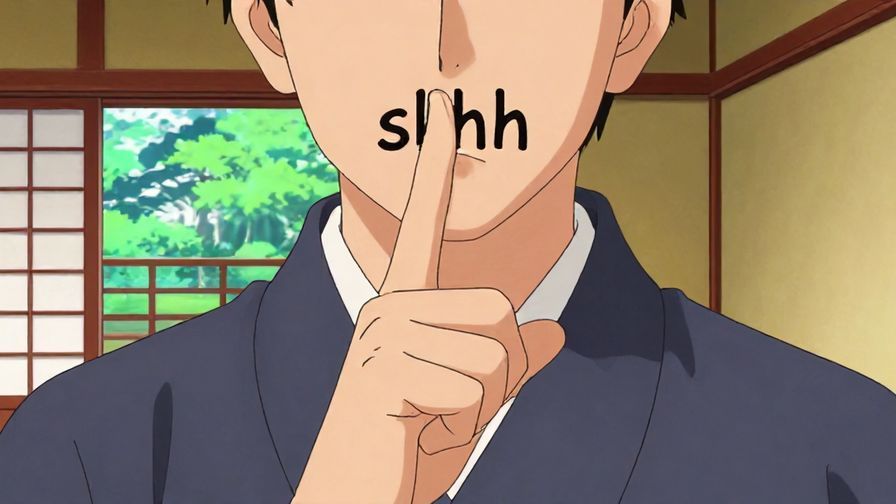
口 (kuchi) means “mouth,” and 慎め (tsutsushime) is a command form of “be cautious” or “be discreet.”
This phrase is quite direct and can sound stern, so it’s often used in serious or formal settings.
It’s less common in casual chats but great to know for strong warnings or when you want to be very clear.
Be cautious using this with strangers or in sensitive contexts, as it might come across as harsh.
Pair it with a serious tone for the right effect.
It’s a classic way to say “watch your language” in a no-nonsense style.
5. 言葉を選んでね (Kotoba o erande ne) – “Choose your words, okay?”
言葉 (kotoba) means “words,” 選んで (erande) is the te-form of “choose,” and ね (ne) softens the command.
This phrase encourages someone to be mindful and selective with their words.
It’s gentle and thoughtful, great for friends or colleagues when you want to advise tactfulness.
Adding ね (ne) keeps it friendly and less confrontational.
Useful when you want to hint that someone’s words might be hurtful or inappropriate without directly scolding.
Try using this when you want a subtle reminder that language matters.
6. ちょっと言葉を気にして (Chotto kotoba o ki ni shite) – “Be a bit careful with your words.”

ちょっと (chotto) means “a little,” 言葉 (kotoba) “words,” and 気にして (ki ni shite) means “be mindful.”
This phrase is casual and soft, perfect for a light reminder among friends or coworkers.
It suggests a gentle nudge rather than a strict warning.
Great for situations where the language is borderline but not severely offensive.
You can use this to keep conversations polite without sounding bossy.
Practice saying it with a smile to keep the mood friendly!
7. 下品な言葉はやめて (Gehin na kotoba wa yamete) – “Stop using vulgar language.”

下品な (gehin na) means “vulgar” or “crude,” 言葉 (kotoba) “words,” and やめて (yamete) “stop.”
This phrase is direct and used to address offensive or rude speech.
It’s common in settings where politeness is expected but someone crosses the line.
Use it carefully, as it can sound sharp.
If you want to soften it, you could add ください (kudasai) for “please stop.”
Perfect phrase to know for moments when you need to clearly call out inappropriate language.
8. もう少し丁寧に話して (Mou sukoshi teinei ni hanashite) – “Speak a little more politely.”

もう少し (mou sukoshi) means “a little more,” 丁寧に (teinei ni) “politely,” and 話して (hanashite) “speak.”
This is a polite way to remind someone to moderate their language and tone.
Ideal for semi-formal situations or when a friend gets a bit too casual.
It’s encouraging without being critical.
You can use this to promote respect in conversation smoothly.
Great phrase to practice when you want to sound gentle yet clear.
Part 2: Polite & Formal Suggestions
9. 言葉遣いにお気をつけください (Kotobazukai ni o-ki o tsuke kudasai) – “Please be careful with your language.”

This is the formal, respectful version of “watch your language.”
言葉遣い (kotobazukai) means “language use,” お気をつけください (o-ki o tsuke kudasai) is a polite request to “please be careful.”
It’s perfect for business meetings, formal events, or when addressing superiors.
Using this phrase shows respect but also sets boundaries.
Make sure your tone matches the formality to keep it effective.
It’s a must-know for professional Japanese communication.
10. 言葉にご注意ください (Kotoba ni go-chuui kudasai) – “Please watch your language.”

言葉 (kotoba) means “words,” ご注意ください (go-chuui kudasai) is a polite phrase meaning “please be cautious.”
This is a formal and courteous way to remind someone to watch their words.
Often used in announcements or official reminders.
It’s effective without sounding accusatory.
Use it in emails, presentations, or polite conversations.
Great phrase to add to your formal Japanese toolkit.
11. 失礼な言葉は控えてください (Shitsurei na kotoba wa hikaete kudasai) – “Please refrain from rude language.”

失礼な (shitsurei na) means “rude,” 言葉 (kotoba) “words,” and 控えてください (hikaete kudasai) means “please refrain.”
This phrase is polite but firm, used in formal requests or warnings.
It clearly asks someone to avoid rude speech without being harsh.
Commonly heard in customer service or workplace contexts.
It’s a respectful way to maintain decorum.
Practice the pronunciation to sound both polite and serious.
12. 言動にご注意願います (Gendo ni go-chuui negai masu) – “Please be careful with your words and actions.”

言動 (gendo) means “words and actions,” ご注意願います (go-chuui negaimasu) is a very polite request for caution.
This phrase extends beyond language to include behavior.
It’s ideal for formal notices or polite reminders in professional settings.
Using this shows tact and respect while setting clear expectations.
Perfect for situations where decorum is crucial.
Try this phrase when you want to cover all bases politely.
13. 言葉を選んで話してください (Kotoba o erande hanashite kudasai) – “Please choose your words carefully.”

This phrase politely asks someone to be mindful of their language choice.
It’s formal but gentle, suitable for supervisors or teachers addressing others.
Clear and respectful, it encourages better communication without offense.
Great for feedback sessions or meetings.
It’s a phrase you’ll find useful in maintaining professionalism.
Practice it to sound courteous and constructive.
14. 言葉遣いには十分お気をつけください (Kotobazukai ni wa juubun o-ki o tsuke kudasai) – “Please be very careful with your language.”

This is a more emphatic version of polite caution about language.
十分 (juubun) means “enough” or “very,” adding weight to the request.
Use it when the situation demands extra care in speech.
It’s often heard in formal warnings or serious meetings.
Helps underline the importance of polite speech.
Good to have in your formal phrase arsenal.
15. 言葉に気を付けていただけますか? (Kotoba ni ki o tsukete itadakemasu ka?) – “Could you please watch your language?”

This is a polite question form, making the request even softer.
いただけますか (itadakemasu ka) is a humble way to ask “could you please.”
Great for delicate situations where you want to avoid confrontation.
It’s respectful and allows the listener room to respond positively.
Try this phrase when you need utmost politeness.
It’s perfect for customer interactions or formal meetings.
16. 不適切な言葉は控えていただけますか? (Futekisetsu na kotoba wa hikaete itadakemasu ka?) – “Could you please refrain from inappropriate language?”

This phrase politely requests someone to stop using inappropriate words.
不適切な (futekisetsu na) means “inappropriate,” and the rest is a humble request.
It’s soft but clear, suitable for sensitive or professional environments.
Using this phrase shows tact and respect.
Practice to sound calm and courteous.
Perfect for diffusing tense situations politely.
Part 3: Very Casual / Native-like Expressions
17. 口に気をつけろよ (Kuchi ni ki o tsukero yo) – “Watch your mouth!”

This is a very casual and somewhat rough way to say “watch your mouth.”
口 (kuchi) means “mouth,” 気をつけろ (ki o tsukero) is the casual imperative “be careful,” and よ (yo) adds emphasis.
Common among close friends or in casual, slightly confrontational situations.
It can sound rough, so use carefully to avoid offending.
Great for learning how native speakers express this in informal settings.
Practice the tone to sound natural and not aggressive.
18. 言葉に気をつけろ (Kotoba ni ki o tsukero) – “Watch your language!”

This is a direct and casual imperative form.
It’s blunt and used among peers or in heated moments.
Good to recognize even if you wouldn’t use it yourself often.
It carries a strong tone, so be mindful of context.
Useful for understanding more native-like expressions.
Try listening for it in dramas or casual conversations.
19. そんな言い方するな (Sonna iikata suru na) – “Don’t say it like that.”

This is a casual, native-like phrase to tell someone to stop speaking a certain way.
するな (suru na) is a strong negative command meaning “don’t do.”
It’s informal and often used between close people.
Be cautious as it can sound harsh outside casual contexts.
Great for understanding everyday conversational Japanese.
Use in role-play to practice natural tone.
20. 言葉に気をつけろよ、マジで (Kotoba ni ki o tsukero yo, maji de) – “Seriously, watch your language!”

This adds マジで (maji de), which means “seriously,” to the casual imperative.
It’s emphatic and often used among young people.
Useful to express genuine frustration or seriousness informally.
Watch your tone to avoid sounding too aggressive.
Good phrase to understand youthful speech nuances.
Listen for it in casual media or street talk.
21. 変な言葉使うなよ (Hen na kotoba tsukau na yo) – “Don’t use weird language.”

変な (hen na) means “weird,” 言葉 (kotoba) “words,” and 使うなよ (tsukau na yo) is “don’t use.”
This is a playful but clear way to tell someone to stop using odd or inappropriate words.
It’s casual, perfect among friends.
Use it when teasing or giving light warnings.
Great for sounding natural and friendly.
Try this in relaxed conversations to keep it fun.
22. その言い方ちょっとやばいよ (Sono iikata chotto yabai yo) – “That way of speaking is kinda bad.”

その (sono) means “that,” 言い方 (iikata) “way of speaking,” ちょっと (chotto) “a little,” やばい (yabai) slang for “bad” or “dangerous,” and よ (yo) emphasizes.
This phrase casually points out that someone’s words are inappropriate or risky.
It’s very informal and common among young people.
Good for understanding slang and modern expressions.
Try using it lightly to keep conversations dynamic.
Perfect for sounding like a native speaker in casual chat.
Concluding Thought
Learning how to say “Watch your language” in Japanese opens up more than just vocabulary—it gives you insight into cultural nuances and conversational styles.
From gentle reminders to firm warnings, these phrases help you navigate social situations with confidence and tact.
Keep practicing, listen closely to native speakers, and soon you’ll naturally know when and how to use these expressions with warmth and precision.