22 Japanese ways to say “When life gives you lemons”
When life throws you a curveball, or more literally, gives you lemons, how do you express that in Japanese? It’s a phrase that inspires turning challenges into opportunities.
Whether you’re learning Japanese or just love idioms, discovering different ways to say this idea can brighten your day and sharpen your language skills.
Japanese has many creative expressions for making the best out of a tough situation, each with its own nuance and charm.
This list of 22 Japanese ways to say “when life gives you lemons” will help you sound warm, relatable, and native-like.
Plus, you’ll get handy pronunciation guides and simple explanations to remember them easily.
Ready to turn those lemons into something sweet? Let’s dive in!
Turning Challenges Into Opportunities
In Japanese culture, resilience and adaptability are highly valued traits, and their language reflects that beautifully.
Many phrases capture the spirit of making the best out of difficult situations, often involving nature or everyday life metaphors.
These expressions are simple to learn and a joy to use in conversation.

If you want a deeper dive, sometimes a great Japanese idioms and phrasebook can be your perfect companion for mastering these expressions.
Ready to hear how the Japanese put a positive spin on tough times? Let’s start!
These phrases will encourage you to see lemons as blessings in disguise.
Part 1: Casual Suggestions
1. ピンチはチャンス (Pinchi wa chansu) – “A crisis is an opportunity.”

This phrase is a classic way to say that difficult moments can lead to something good.
“ピンチ (Pinchi)” means “crisis” or “tight spot,” and “チャンス (Chansu)” is simply “chance” or “opportunity.”
It’s easy to remember because it rhymes and sounds catchy.
Every time you face a setback, remind yourself: a crisis might just be your next big break.
You might also hear “ピンチをチャンスに変える (Pinchi o chansu ni kaeru)” – “turn a crisis into an opportunity.”
Use this phrase to encourage friends or yourself with a positive mindset.
2. 柑橘系に感謝 (Kankitsukei ni kansha) – “Grateful for citrus fruits.”
This playful phrase literally means “being thankful for citrus fruits,” symbolizing lemons as gifts.
“柑橘系 (Kankitsukei)” means “citrus family,” and “感謝 (Kansha)” means “gratitude.”
It’s a quirky but warm way to say you appreciate even sour moments.
Try saying it when you want to lighten the mood after a mishap.
It’s not a common idiom, but a fun phrase you can create to personalize your learning.
It reminds you to find gratitude in unexpected places—even in lemons!
3. 塩梅次第 (Anbai shidai) – “Depends on the seasoning.”

“塩梅 (Anbai)” means “seasoning” or “condition,” and “次第 (Shidai)” means “depends on.”
It suggests that the outcome depends on how you handle things—just like seasoning changes a dish’s taste.
It’s a clever metaphor for life’s challenges being adjustable.
Remember it by picturing cooking with lemons, where the right balance makes all the difference.
You can use this when talking about adapting to situations.
This phrase teaches that your attitude shapes the final flavor of your experience.
4. 逆境こそ成長の種 (Gyakkyo koso seicho no tane) – “Adversity is the seed of growth.”

This beautiful phrase highlights that tough times are the starting point for personal growth.
“逆境 (Gyakkyo)” means “adversity,” and “成長の種 (Seicho no tane)” means “seed of growth.”
It’s inspiring and poetic, perfect for thoughtful reflection.
Imagine planting a seed in rocky soil that grows into a mighty tree.
You can say this to encourage someone facing difficulties.
It nicely captures the essence of turning lemons into lemonade.
5. 笑う門には福来る (Warau kado ni wa fuku kuru) – “Good fortune comes to the laughing gate.”

This popular proverb means that happiness and luck come to those who keep smiling.
“笑う (Warau)” means “to laugh,” “門 (Kado)” is “gate,” and “福来る (Fuku kuru)” means “fortune comes.”
It’s a warm reminder to stay positive when life hands you sour moments.
Use this phrase when you want to lift spirits or keep things lighthearted.
It’s often used in everyday conversation and easy to remember.
Smile through the lemons and invite good fortune in!
6. 七転び八起き (Nanakorobi yaoki) – “Fall seven times, stand up eight.”
This classic proverb embodies resilience perfectly.
“七転び (Nanakorobi)” means “fall seven times,” and “八起き (Yaoki)” means “stand up eight.”
It’s a vivid image of persistence no matter the setbacks.
Think of it as the ultimate “keep going” motto.
It’s great for encouraging yourself or friends during hard times.
Perfect for reminding yourself to keep squeezing the best out of lemons!
7. 柑橘を絞る (Kankitsu o shiboru) – “Squeeze the citrus.”

This literal phrase means “to squeeze citrus,” symbolizing making the most of what you have.
“柑橘 (Kankitsu)” means “citrus,” and “絞る (Shiboru)” means “to squeeze.”
It’s a simple metaphor for extracting value from sour situations.
Imagine turning lemons into fresh juice—a tasty reward.
You can use it casually when talking about making something positive out of difficulty.
It’s a neat way to connect language and life’s little lessons.
8. 笑顔で乗り越える (Egao de norikoeru) – “Overcome with a smile.”

This phrase encourages facing challenges with a positive attitude.
“笑顔 (Egao)” means “smile,” and “乗り越える (Norikoeru)” means “to overcome.”
It’s straightforward and easy to remember.
Use it as a personal motto or advice to others.
It promotes warmth and strength in adversity.
Smiling through sour times makes everything sweeter.
Part 2: Polite & Formal Suggestions
9. 困難を機会に変える (Konnan o kikai ni kaeru) – “Turn difficulties into opportunities.”

This polite phrase is great for formal settings.
“困難 (Konnan)” means “difficulty,” “機会 (Kikai)” is “opportunity,” and “変える (Kaeru)” means “to change.”
It clearly expresses the idea of making the best out of problems.
Perfect for speeches, presentations, or thoughtful conversations.
It helps you sound professional and optimistic at the same time.
Keep it handy for work or formal encouragement.
10. 苦境から学ぶ (Kukyō kara manabu) – “Learn from hardship.”
This expression focuses on learning through tough times.
“苦境 (Kukyō)” means “hardship,” “から (Kara)” means “from,” and “学ぶ (Manabu)” means “to learn.”
It’s concise and respectful, fitting formal contexts.
Use it to show growth mindset in professional or academic settings.
It reminds you that lemons can teach valuable lessons.
Great for resumes, interviews, or thoughtful advice.
11. 困難は成長の糧 (Konnan wa seichō no kate) – “Difficulties are nourishment for growth.”
This poetic phrase compares hardship to food that helps us grow.
“困難 (Konnan)” means “difficulties,” “成長 (Seichō)” is “growth,” and “糧 (Kate)” means “nourishment.”
It works well in both formal and literary contexts.
Use this to inspire or reflect on personal development.
It’s a beautiful way to appreciate life’s lemons.
Perfect for speeches or essays about overcoming obstacles.
12. 前向きに生きる (Maemuki ni ikiru) – “Live positively.”
A simple and polished phrase encouraging optimism.
“前向き (Maemuki)” means “forward-facing” or “positive,” “に (Ni)” is a particle, and “生きる (Ikiru)” means “to live.”
It’s easy to say and works in many situations.
Great for formal advice or motivational talks.
Keep it in your toolkit to express your positive outlook.
Living with a smile makes sour moments sweeter.
13. 問題を乗り越える力 (Mondai o norikoeru chikara) – “The power to overcome problems.”
This phrase highlights inner strength.
“問題 (Mondai)” means “problem,” “乗り越える (Norikoeru)” means “to overcome,” and “力 (Chikara)” means “power.”
It’s formal and inspiring.
Use it when praising resilience in speeches or writing.
It reminds us that lemons are just challenges to conquer.
Perfect for official encouragement or personal affirmation.
14. 柑橘のように爽やかに (Kankitsu no yō ni sawayaka ni) – “Fresh like citrus.”
This elegant simile compares a positive attitude to fresh citrus.
“柑橘 (Kankitsu)” means “citrus,” “のように (No yō ni)” means “like,” and “爽やかに (Sawayaka ni)” means “freshly” or “refreshingly.”
It’s a lovely way to say “keep it fresh” in formal conversations.
Use it in speeches or writing to add an uplifting touch.
It’s a gentle reminder to keep life’s sour parts refreshing.
Great for encouraging calm positivity.
15. 苦しみは宝の山 (Kurushimi wa takara no yama) – “Suffering is a mountain of treasure.”
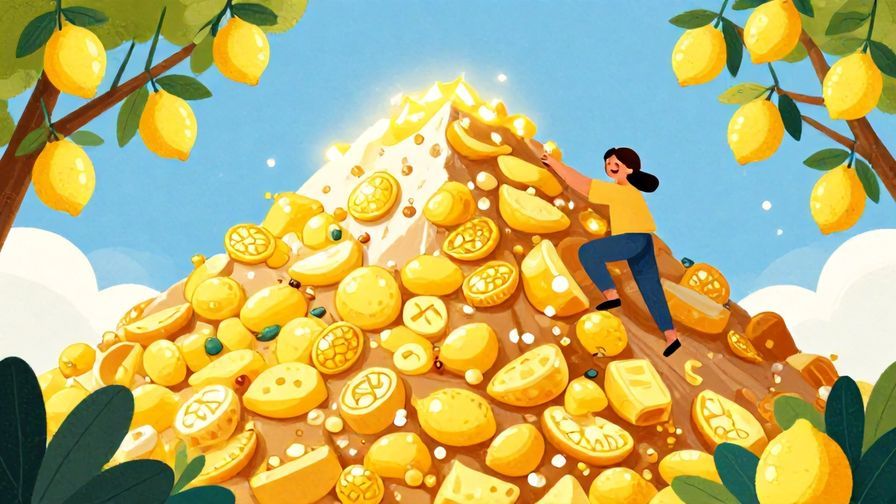
This poetic phrase sees hardship as valuable.
“苦しみ (Kurushimi)” means “suffering,” “宝 (Takara)” is “treasure,” and “山 (Yama)” means “mountain.”
It’s a formal and beautiful metaphor.
Use it to express respect for life’s lessons.
It encourages embracing lemons as hidden gifts.
Perfect for heartfelt speeches or writing.
16. 柔軟に対応する (Jūnan ni taiō suru) – “Respond flexibly.”
This practical phrase means to adapt with flexibility.
“柔軟 (Jūnan)” means “flexible,” “に (Ni)” is a particle, and “対応する (Taiō suru)” means “to respond.”
It’s formal and useful in business or daily life.
Use it when advising adaptability in challenges.
It’s about bending without breaking, just like handling lemons gently.
Great for professional or polite conversation.
Part 3: Very Casual / Native-like Expressions
17. レモンをレモネードにする (Remon o remonēdo ni suru) – “Make lemonade from lemons.”

This is the literal translation of the English phrase, commonly used by younger Japanese speakers.
“レモン (Remon)” means “lemon,” and “レモネード (Remonēdo)” means “lemonade.”
It’s casual, fun, and easy to say.
Great for informal chats or social media posts.
It shows how global culture influences everyday Japanese.
Perfect for expressing optimism in a friendly way.
18. ピンチを楽しむ (Pinchi o tanoshimu) – “Enjoy the pinch.”

This fun phrase means to enjoy difficult moments.
“ピンチ (Pinchi)” means “crisis” or “pinch,” and “楽しむ (Tanoshimu)” means “to enjoy.”
It’s informal and shows a carefree attitude.
Use it with friends to lighten up stressful times.
It encourages facing lemons with a smile and playfulness.
Great for casual encouragement.
19. 逆境をバネにする (Gyakkyo o bane ni suru) – “Use adversity as a springboard.”

This phrase means turning tough times into motivation.
“逆境 (Gyakkyo)” means “adversity,” “バネ (Bane)” means “spring,” and “する (Suru)” means “to do.”
It’s casual and vivid.
Use it when you want to sound energetic and hopeful.
It’s a great way to express bouncing back from lemons.
Perfect for motivational talks or daily pep talks.
20. レモンから元気をもらう (Remon kara genki o morau) – “Get energy from lemons.”

This casual phrase means drawing strength from challenges.
“レモン (Remon)” means “lemon,” “元気 (Genki)” means “energy” or “vitality,” and “もらう (Morau)” means “to receive.”
It’s a nice way to say lemons give you power.
Use it in friendly conversations for a positive vibe.
It’s a sweet way to express finding joy in sour moments.
Great for daily motivation.
21. 柑橘パワーで乗り切る (Kankitsu pawā de norikiru) – “Get through it with citrus power.”
This playful phrase says you can overcome with the “power” of citrus.
“柑橘 (Kankitsu)” means “citrus,” “パワー (Pawā)” is “power,” and “乗り切る (Norikiru)” means “to get through.”
It’s informal and fun.
Use it when you want to sound energetic and quirky.
It’s great for social conversations or online posts.
It’s like charging up with lemon energy.
22. レモンみたいに酸っぱいけど大丈夫 (Remon mitai ni suppai kedo daijōbu) – “Like a lemon, sour but it’s okay.”

This casual phrase acknowledges the sourness but keeps a positive twist.
“レモンみたいに (Remon mitai ni)” means “like a lemon,” “酸っぱい (Suppai)” means “sour,” “けど (Kedo)” means “but,” and “大丈夫 (Daijōbu)” means “it’s okay.”
It’s very natural and conversational.
Use it to admit hardship but stay optimistic.
It’s perfect for everyday chats or lighthearted encouragement.
Lemons might be sour, but you’re still doing great!
Concluding Thought
Exploring these 22 Japanese expressions reveals a rich, warm perspective on overcoming life’s sour moments.
Each phrase encourages resilience, positivity, and creativity in turning challenges into opportunities.
So next time life gives you lemons, you’ll have a whole bouquet of Japanese wisdom to brighten your way! Keep smiling and keep learning!