22 Japanese ways to say “Is something wrong?”
Ever noticed someone looking a bit off but aren’t sure how to ask if something’s wrong in Japanese? It can be tricky to find the right phrase that fits the tone and relationship.
Japanese offers a rich palette of expressions from casual to super polite, and even some native-like slang that will help you connect authentically.
Whether you’re chatting with friends, colleagues, or someone you want to comfort gently, there’s a perfect way to ask “Is something wrong?” here.
Having a variety of ways to phrase this question lets you tune into the mood better and show your care in just the right way.
Plus, learning these phrases can boost your confidence in conversations and make your Japanese sound much more natural.
Ready to explore 22 warm, friendly, and sometimes playful Japanese ways to say “Is something wrong?” Let’s dive in!
Understanding the Basics Before Diving In
Before we jump into the list, it’s useful to know a bit about the structure of these phrases. Most revolve around key words like “大丈夫” (daijoubu) meaning “okay” or “wrong” phrases like “どうした” (doushita) meaning “what happened?”
Many expressions come with subtle differences in politeness and context, so choosing the right one depends on who you’re talking to and how close you are.
Keep in mind, Japanese often values indirectness and softness when checking on someone’s feelings.

If you want to get started quickly, a great beginner phrasebook can guide you through these basics step-by-step.
These resources often include pronunciation tips and useful dialogues to practice your new phrases.
Once you get the hang of these simple checks, you’ll find it easier to pick up the more nuanced expressions ahead.
Part 1: Casual Suggestions
1. 大丈夫? (Daijoubu?) – “Are you okay?”

This is the go-to phrase for casually asking if someone is alright.
“大丈夫” literally means “big丈夫” or “all right,” and the question mark makes it a simple “Are you okay?”
It’s friendly and works perfectly with friends, family, or people you know well.
Its simplicity is its charm: just say “Daijoubu?” with a kind tone.
A related phrase is “大丈夫ですか?” (Daijoubu desu ka?) for a more polite twist.
Use this one often to show care without sounding too formal or intrusive.
2. どうした? (Doushita?) – “What happened?”

This phrase is great for when you notice something’s off but want to be a bit more direct.
“どう” (dou) means “how” and “した” (shita) is the past tense of “to do,” so literally “How did (it) happen?”
It’s casual and often used among friends or peers.
Important: Don’t use this too bluntly with strangers or seniors, as it might sound a bit abrupt.
Example: If a friend looks upset, you can ask, “どうした?”
It’s a good phrase to keep handy for friendly, informal conversations.
3. 何かあった? (Nanika atta?) – “Did something happen?”

This is another casual, caring way to ask if something is wrong.
“何か” means “something,” and “あった” is the past tense of “to be” or “to happen.”
Use it when you suspect some event caused distress.
It’s less direct than “どうした?” and softer than simply asking “Are you okay?”
Try it out in situations where you want to sound gentle and curious.
It’s a smooth way to open up a conversation about feelings.
4. 大丈夫?どうしたの? (Daijoubu? Doushita no?) – “Are you okay? What happened?”

Combining these two phrases makes your care extra clear.
It’s casual, but the “の” at the end softens “どうした” making it more like “What’s wrong?”
This phrase is great among close friends or family.
It invites the other person to open up comfortably.
Perfect to use when you sense something’s definitely up but want to sound warm.
Using this combo shows you really care and want to listen.
5. 具合悪い? (Guai warui?) – “Are you feeling unwell?”

This phrase focuses on physical or emotional discomfort.
“具合” means “condition,” and “悪い” means “bad.”
It’s a casual way to ask if someone’s health or mood is off.
Often used with friends or coworkers.
It’s a helpful phrase if you want to be specific about wellness.
Try it when someone looks pale or tired.
6. どうかした? (Douka shita?) – “Is something wrong?”

This expression is a softer, more indirect way to ask if something’s wrong.
“どうか” adds a nuance of “something” or “anything,” and “した” is “did.”
It’s casual, perfect for friends or close acquaintances.
A subtle, less direct way to check in, which feels natural.
It’s great when you want to sound gentle and non-intrusive.
Use this phrase to invite someone to share without pressure.
7. 何か困ったことある? (Nanika komatta koto aru?) – “Is there something bothering you?”

Here you ask specifically if there’s a problem causing distress.
“困ったこと” means “troubled things,” and “ある” means “there is.”
It’s casual but thoughtful, great for friends or colleagues.
Shows you’re ready to help if needed.
Useful when you suspect a problem but don’t want to be too direct.
It’s a kind way to show empathy and willingness to support.
8. 何か変だよ? (Nanika hen da yo?) – “Something’s strange, isn’t it?”

This phrase points out something seems off without directly asking.
“変” means “strange,” and the “よ” adds a soft emphasis.
It’s a casual way to invite the other to explain.
Good for friends or informal conversations.
A playful yet concerned way to check if something’s wrong.
Try it when you want to gently hint you’ve noticed a change.
Part 2: Polite & Formal Suggestions
9. 大丈夫ですか? (Daijoubu desu ka?) – “Are you okay?” (polite)

This is the polite version of “Daijoubu?” suitable for coworkers or acquaintances.
Adding “ですか” makes it respectful and appropriate in formal settings.
It’s simple but shows genuine concern without being too familiar.
Great for workplace or new acquaintances.
Helps maintain politeness while checking on someone’s wellbeing.
Perfect phrase to keep in your formal conversation toolkit.
10. 何か問題がありますか? (Nanika mondai ga arimasu ka?) – “Is there a problem?” (formal)

This phrase is quite formal and direct, asking if there’s a problem.
“問題” means “problem,” and “ありますか” is polite “is there?”
Useful in professional or official contexts.
Use carefully—it might sound too direct for casual situations.
It’s best for serious contexts like work or official matters.
Shows professionalism while addressing issues clearly.
11. 何かお困りですか? (Nanika okomari desu ka?) – “Is something troubling you?” (formal)

This is a polite, respectful way to check if someone is troubled.
“お困り” is the honorific form of “困る” (to be troubled).
Often used in customer service or polite conversation.
It’s gentle and shows readiness to assist.
Perfect for strangers or formal acquaintances.
Practice this phrase if you want to sound courteous and helpful.
12. 具合はいかがですか? (Guai wa ikaga desu ka?) – “How is your condition?” (polite)
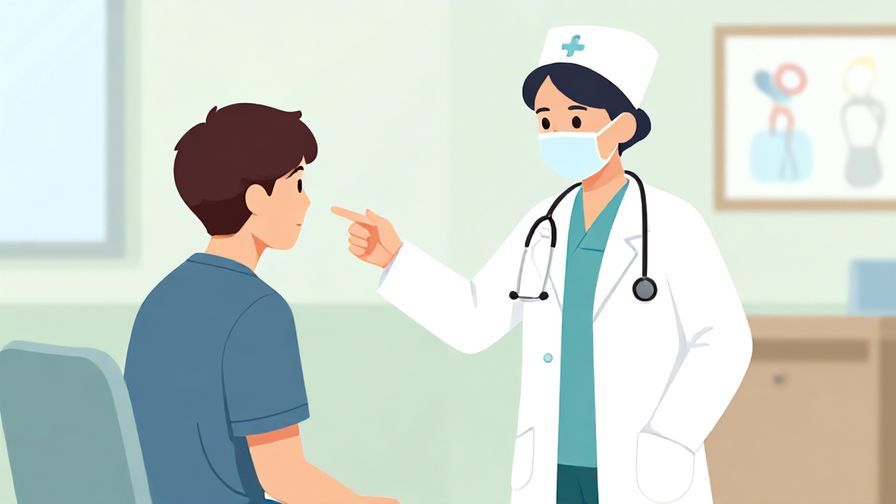
This is a polite way to ask about someone’s health or condition.
“具合” means “condition,” and “いかがですか” is a polite “how is?”
Used in medical or formal caring situations.
It’s respectful and caring without being too personal.
Helpful phrase if you want to inquire gently about wellbeing.
Use it when you want to sound professional and considerate.
13. 何か異変がありましたか? (Nanika ihen ga arimashita ka?) – “Did something unusual happen?”

This is a formal way to ask if something out of the ordinary occurred.
“異変” means “unusual event,” and “ありましたか” is polite past tense question.
It’s appropriate for serious or official conversations.
Not used casually but useful in investigations or reports.
Shows careful interest in understanding the situation.
Keep this phrase handy for formal inquiries.
14. お加減はいかがですか? (O-kagen wa ikaga desu ka?) – “How are you feeling?” (very polite)

This is an even more polite and respectful expression to inquire about health.
“お加減” is an honorific word for condition or health.
Perfect for elders, superiors, or formal occasions.
It’s very gentle and caring.
Shows deep respect and concern.
Use it when you want to sound especially considerate.
15. 何かお手伝いできることはありますか? (Nanika otetsudai dekiru koto wa arimasu ka?) – “Is there anything I can help with?”

This phrase is polite and focuses on offering assistance.
It’s not directly asking if something’s wrong but invites the other to share problems.
Great for formal or semi-formal situations.
It shows initiative and kindness.
Use this to express readiness to support someone.
A positive way to open up a conversation about difficulties.
16. ご気分が悪いですか? (Go-kibun ga warui desu ka?) – “Are you feeling unwell?” (polite)

This is a polite version of asking about someone’s physical or emotional discomfort.
“気分” means “feeling” or “mood,” and “悪い” means “bad.”
Appropriate for polite or formal contexts.
Good phrase for coworkers or acquaintances.
Shows thoughtful concern without being too casual.
Use this to check on someone’s wellbeing politely.
Part 3: Very Casual / Native-like Expressions
17. どうかしたの? (Douka shita no?) – “Is something wrong?” (casual, with soft ending)

This is similar to “どうかした?” but with “の” softening the question.
It’s casual, warm, and feels very natural in everyday speech.
Great for close friends or younger people.
It invites sharing without pressure.
Often used when you want to sound caring but relaxed.
Perfect for informal, heartfelt conversations.
18. なんかあった? (Nanka atta?) – “Did something happen?” (very casual)

This is the very casual version of “何かあった?”
“なんか” is slangy for “something,” making it sound chill.
Used among close friends or peers.
It’s relaxed and often used with a curious tone.
Great for casual chats and catching up.
Use this when you want to sound easygoing and friendly.
19. どうしたん? (Doushitan?) – “What happened?” (casual, Kansai dialect flavor)

This is a casual form popular in Kansai (Osaka) region.
The “ん” ending adds a soft explanatory tone.
Great if you want to sound regional or informal.
It’s a fun way to ask “what happened?” with warmth.
Use it if you’re familiar with Kansai dialect or want to add local flavor.
It’s inviting and friendly.
20. どうしたのさ? (Doushita no sa?) – “What’s wrong?” (casual, playful)

This adds a “さ” ending which makes the phrase playful.
It’s casual and often used teasingly among friends.
Shows friendly concern with a lighthearted tone.
Be careful not to use this with someone very upset.
Great for close, easygoing friends.
Use it to keep the mood light while checking in.
21. どうしたんだよ? (Doushitan da yo?) – “What’s wrong, man?” (very casual, masculine)
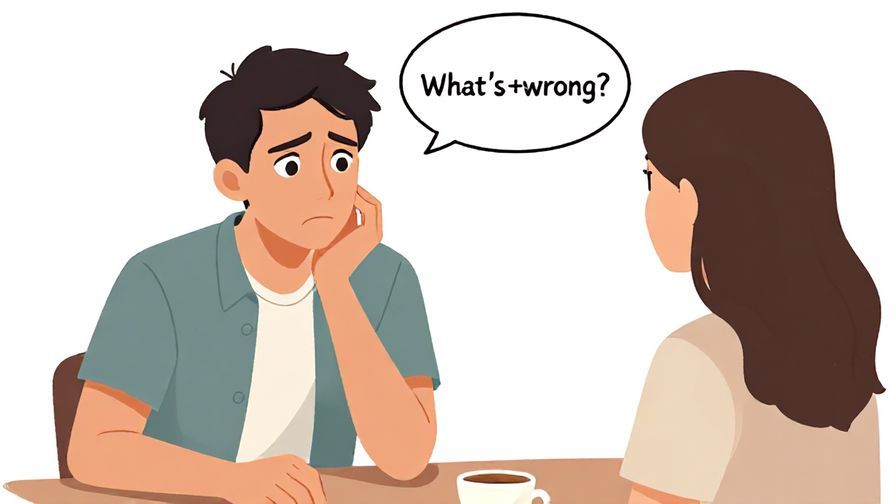
This is a casual, masculine way to ask what’s wrong.
“だよ” adds emphasis and familiarity.
Commonly used by young men to close friends.
It’s direct but friendly.
Use it with people you’re very close to in informal settings.
Shows a mix of concern and casual camaraderie.
22. なんか変じゃない? (Nanka hen janai?) – “Isn’t something strange?” (casual, colloquial)

This is a casual, colloquial phrase to hint something’s off.
“じゃない?” is a soft, conversational tag meaning “isn’t it?”
It’s perfect for informal talks among friends.
Allows you to gently share your observation.
Great when you want to check without sounding too serious.
Use it to start a fun or curious conversation about what’s going on.
Concluding Thought
Exploring these 22 ways to ask “Is something wrong?” in Japanese opens up a world of nuanced care and connection.
From polite formal phrases to casual, native-like expressions, you can now match your tone perfectly to any situation.
Keep practicing these phrases, and soon you’ll instinctively know how to check in warmly and naturally in Japanese conversations. Ganbatte!