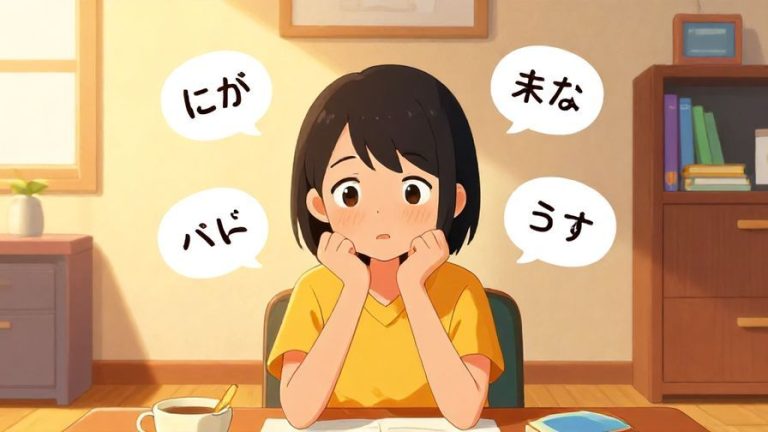
22 Japanese ways to say “I’m Bored”
Ever find yourself stuck in that restless moment when nothing seems to catch your interest? We’ve all been there—feeling that nagging sense of boredom creeping in.
Expressing boredom in another language can be a fun way to connect with culture and even lighten the mood. Japanese, with its rich variety of expressions, offers plenty of ways to say “I’m bored” depending on the situation.
From casual phrases you can throw out with friends to more polite ways for formal settings, Japanese gives you options that fit your mood perfectly.
Learning these expressions can not only expand your vocabulary but also help you sound more natural and relatable when chatting in Japanese.
Plus, knowing how to express boredom in multiple ways might just make those dull moments a little more interesting!
Ready to dive into 22 Japanese ways to say “I’m bored”? Let’s get started and add some flavor to your Japanese conversations.
Understanding the Basics of Saying “I’m Bored” in Japanese
Before we jump into the list, it’s good to know the general word for boredom in Japanese: 退屈 (たいくつ, taikutsu), which means boredom or tediousness.
But Japanese speakers often use a variety of expressions depending on how casual, formal, or emotional they feel. This makes the language rich and expressive when talking about boredom.
Knowing these nuances can help you pick the right phrase for the right moment.
If you want a solid foundation, using a beginner phrasebook is a great way to start recognizing patterns in Japanese expressions.
Once you have a grasp on basic phrases, you can easily adapt them to sound more natural or casual.
Let’s explore some easy and relatable ways to say “I’m bored” in Japanese!
Part 1: Casual Suggestions
1. 退屈だな (Taikutsu da na) – “I’m bored.”
This is the straightforward way to say “I’m bored” using the word 退屈 (たいくつ, taikutsu) which means boredom.
Adding だな (da na) at the end makes it sound casual and a bit reflective, like you’re muttering to yourself.
It’s perfect to use with friends or when you’re just quietly expressing your feelings.
If you want to sound natural, this phrase fits many everyday situations.
It’s also common to hear just 退屈だ (taikutsu da) without な for a slightly more neutral tone.
Try using it next time you want to casually share your boredom without sounding too formal.
2. 暇だなあ (Hima da naa) – “I’m so free (bored).”
暇 (ひま, hima) literally means “free time,” but when you say 暇だなあ (hima da naa), it’s a friendly way to say “I’m bored” or “I have nothing to do.”
The なあ (naa) at the end adds a soft feeling, like you’re sharing your mood with someone close.
This phrase is often used in casual chats and can show you’re looking for something fun to do.
Be careful not to use it in formal situations as it’s quite informal.
For example, you might say this when hanging out with friends on a lazy afternoon.
It’s a gentle, relatable way to express boredom that feels natural in everyday speech.
3. つまらない (Tsumaranai) – “Boring.”
つまらない (tsumaranai) means “boring” and can be used to express that you find your current situation dull.
It’s a versatile word often used to describe people, things, or moments that don’t interest you.
When you say つまらない, you’re implying that you’re bored because nothing is entertaining.
It’s a direct way to express frustration with boredom.
You can soften it by adding です (desu) to make it polite: つまらないです (tsumaranai desu).
Use this when you want to be clear about your boredom but still sound polite if needed.
4. なんか退屈 (Nanka taikutsu) – “Kind of bored.”
なんか (nanka) means “kind of” or “somehow,” so なんか退屈 (nanka taikutsu) is a casual way to say “I’m kind of bored.”
This phrase adds a laid-back tone, like you’re not overly dramatic about your boredom, just casually mentioning it.
It’s perfect for informal situations and when chatting with friends.
Be mindful that なんか is very casual and shouldn’t be used in formal conversations.
It’s a great phrase to practice sounding natural and conversational.
Try it next time you want to casually hint at your boredom without making a big deal out of it.
5. もう退屈すぎる (Mou taikutsu sugiru) – “I’m super bored.”
Adding すぎる (sugiru) to a verb or adjective means “too much” or “excessively.”
So 退屈すぎる (taikutsu sugiru) means “too bored” or “super bored.”
もう (mou) at the start means “already” or “anymore,” emphasizing the feeling.
This expression is perfect when you want to stress just how bored you are.
It’s casual and often used in everyday conversations.
Try using it to dramatically express your boredom in a playful way!
6. 何もすることがない (Nani mo suru koto ga nai) – “There’s nothing to do.”
This phrase literally means “There’s nothing to do,” which is a clear way to explain boredom.
It’s made up of 何も (なにも, nani mo) meaning “nothing,” すること (すること, suru koto) meaning “things to do,” and ない (nai) meaning “not exist.”
It’s a practical phrase that clearly expresses why you’re bored.
You can use it casually or politely depending on the tone.
It’s great for explaining your situation when asked why you’re bored.
Use it to communicate plainly and honestly about your boredom.
7. 退屈で仕方がない (Taikutsu de shikata ga nai) – “Absolutely bored.”
仕方がない (しかたがない, shikata ga nai) means “there’s no help” or “can’t be helped.”
When combined with 退屈, it expresses that boredom is overwhelming and unavoidable.
This phrase sounds a bit stronger and more dramatic than just saying bored.
It’s a good phrase to use when you feel really stuck in boredom.
It also shows a little frustration with the situation.
Try it when you want to express your boredom with a touch of emotion.
8. うんざりだ (Unzari da) – “I’m fed up (bored).”
うんざり (unzari) means “fed up” or “sick of,” often implying boredom mixed with annoyance.
It’s a very casual phrase to show strong boredom or frustration.
Use this when you want to express that you’re tired of something boring.
This phrase carries a tone of impatience or irritation.
It’s better to use it with close friends or informal settings.
Keep this one in your casual vocabulary to sound more native-like!
Part 2: Polite & Formal Suggestions
9. 退屈しています (Taikutsu shite imasu) – “I am bored.” (polite)
This is the polite way to say “I am bored” using the continuous form しています (shite imasu) of the verb する (to do).
It’s perfect for formal conversations or when speaking with people you don’t know well.
The phrase sounds respectful yet clear about your feeling.
Use this in a professional setting or with elders.
It’s a neat way to share your mood without sounding too casual or rude.
Adding polite expressions like this helps you navigate different social situations smoothly.
10. 退屈に感じます (Taikutsu ni kanjimasu) – “I feel bored.” (polite)
感じます (かんじます, kanjimasu) means “to feel,” so this phrase politely expresses “I feel bored.”
It’s a bit more formal and introspective than just saying 退屈しています.
This expression is suitable for thoughtful or serious conversations.
Use it when you want to express your feelings carefully and respectfully.
It can also be a good phrase for written communication or emails.
Learning these polite variations will make your Japanese sound more polished.
11. 退屈でございます (Taikutsu de gozaimasu) – Very formal “I’m bored.”
でございます (de gozaimasu) is a very polite, formal ending used in business or formal announcements.
When combined with 退屈, it gives a highly respectful way to say “I’m bored.”
It’s not commonly used in casual conversation but perfect for formal speeches or customer service.
Use it only when appropriate for high-level politeness.
It’s a helpful phrase to recognize, even if you don’t use it often.
Knowing formal language nuances helps you understand different social layers in Japan.
12. 少し退屈しています (Sukoshi taikutsu shite imasu) – “I’m a little bored.”
少し (すこし, sukoshi) means “a little” or “slightly,” so this phrase softens the boredom feeling.
It’s polite and useful when you want to express mild boredom without sounding negative.
This phrase is perfect for polite conversations with friends or coworkers.
It’s a gentle way to share your mood that keeps things light.
Use it when you want empathy but don’t want to complain too much.
It’s a great phrase for showing subtle feelings politely.
13. 退屈に思います (Taikutsu ni omoimasu) – “I think it’s boring.”
思います (おもいます, omoimasu) means “to think,” so this phrase politely says “I think it’s boring.”
It’s useful for expressing opinions politely in conversations or meetings.
This phrase can refer to a situation, event, or even a topic.
Use it when you want to share your thoughts without sounding too blunt.
It’s a respectful way to express boredom in formal or semi-formal settings.
Try this phrase to sound thoughtful and polite in your discussions.
14. 退屈しております (Taikutsu shite orimasu) – Humble “I am bored.”
しております (shite orimasu) is a humble form of しています (shite imasu), used to show respect to the listener.
When combined with 退屈, it creates a humble and polite way to say “I am bored.”
This form is often used in very formal or business situations.
It’s good to recognize this phrase even if you don’t use it regularly.
Using humble language correctly impresses native speakers and shows cultural understanding.
Perfect for formal emails or respectful dialogue.
15. 退屈でございます (Taikutsu de gozaimasu) – Formal and polite “I am bored.”
This phrase is a slightly less formal version of #11 but still very polite and respectful.
It’s ideal for formal occasions where you want to express boredom without disrespect.
It’s commonly heard in customer service or official speeches.
Use this phrase to sound courteous and refined.
Understanding this version helps you navigate formal social situations in Japan.
It’s a good phrase to keep in your polite conversation toolkit.
16. 退屈を感じております (Taikutsu o kanjite orimasu) – “I am feeling bored.” (humble)
感じております (kanjite orimasu) is the humble continuous form of “feel.”
This phrase politely and humbly expresses “I am feeling bored.”
It’s useful in very formal contexts or when showing deep respect.
Use it for written communication or formal speeches.
This phrase shows careful attention to politeness nuance.
Great for impressing native speakers with your advanced language skills.
Part 3: Very Casual / Native-like Expressions
17. ヒマすぎ (Hima sugi) – “Way too bored.”
Shortened slang from 暇すぎる (hima sugiru), meaning “too bored.”
It’s a super casual, native-like way to say you’re bored beyond belief.
Often used among young people and friends.
Great for texting or casual speech.
Try to avoid this in formal settings.
It adds a fun and playful tone to your conversations.
18. ダルい (Darui) – “I’m feeling lazy and bored.”
ダルい (darui) means feeling sluggish, lazy, or bored in a laid-back way.
It’s a common slang term used to describe that “I don’t want to do anything” mood.
Perfect for casual chats with friends.
It sounds very natural and is widely used in everyday Japanese.
Try using it when you want to express boredom mixed with laziness.
This word captures the emotional side of boredom well.
19. 退屈すんだけど (Taikutsu sun dakedo) – “I’m bored, you know.”
すん (sun) is a casual contraction of する (suru), and だけど (dakedo) means “but” or “you know.”
Combined, this phrase sounds very conversational and casual.
It feels like you’re telling a friend “I’m bored, you know.”
Great for spoken Japanese and texting.
It adds a bit of personality and emotion to your boredom expression.
Use it with close friends to sound natural and native-like.
20. 何もしたくない (Nani mo shitakunai) – “I don’t want to do anything.”
This phrase clearly expresses a lack of motivation, often linked to boredom.
It’s casual and straightforward, meaning “I don’t want to do anything.”
Useful to express that you feel bored and unmotivated simultaneously.
It’s a very natural phrase used by native speakers.
Try it when you want to be honest about your mood.
It’s also a great phrase to recognize when others express themselves this way.
21. つまんない (Tsumannai) – Casual form of “boring.”
つまんない (tsumannai) is a shortened, slangy form of つまらない (tsumaranai).
It’s very casual and often used by young people.
Perfect for informal conversations with friends.
It adds a lighter, playful tone to saying something is boring.
Use it to sound more like a native speaker in casual settings.
It’s an easy phrase to throw in daily chats.
22. 飽きた (Akita) – “I’m bored/tired of this.”
飽きた (あきた, akita) means “I’m bored” or “I’m tired of this.”
It’s used when you’re fed up with something repetitive or dull.
Very common in casual speech, it shows a stronger sense of boredom than just plain 退屈.
It’s great for expressing frustration with boring routines or activities.
Use it with friends or family to sound natural and expressive.
It’s a useful word to describe boredom that’s more about irritation.
Concluding Thought
Exploring all these ways to say “I’m bored” in Japanese shows just how expressive and nuanced the language can be.
Whether you want to sound casual, polite, or native-like, there’s a phrase here for every mood and situation.
So next time boredom strikes, you’ll be ready to say it in the perfect Japanese way—and maybe even find a little fun in the process!