24 Japanese ways to say “It’s Cold Today”
Feeling that chill in the air? Japanese has so many beautiful ways to say “It’s cold today” that can add nuance and warmth to your conversation. Whether you’re chatting with friends or sounding polite at work, there’s a phrase for every situation!
In this listicle, we’ll explore 24 different expressions—from casual to formal, and even some native-like slang. You’ll get pronunciation guides and helpful tips so you can say them confidently.
These expressions aren’t just cool to know—they’ll help you connect with Japanese speakers on a deeper level, showing you understand the subtle moods behind the words.
We’ll break them down by style and formality, so you can easily pick the right phrase for the right moment. Plus, there’s a little affiliate link sprinkled in to help you practice more effectively.
Ready to warm up your Japanese skills and keep the cold at bay? Let’s dive into some cozy phrases that will make you sound like a native in no time!
Keep reading to discover your new favorite way to say “It’s cold today” in Japanese!
Warm-Up: Why So Many Ways to Say “It’s Cold Today”?
Japanese is a language that loves detail and context. The way you say “It’s cold today” can change depending on who you’re talking to and how you feel.
From simple statements to more expressive phrases, these variations help you convey everything from a casual observation to a polite comment or even a poetic feeling.
Knowing multiple ways to say this phrase will make your conversations more natural and show your cultural understanding.

Sometimes, using a great beginner phrasebook can give you a perfect starting point for a cohesive understanding.
Mastering these phrases is easier than you might think, and you can start using them today!
Just a little practice will have you sounding warm and natural in any chilly conversation.
Part 1: Casual Suggestions
1. 寒いね (Samui ne) – “It’s cold, isn’t it?”

This is the most common casual way to say “It’s cold” among friends.
“寒い” (samui) means “cold,” and “ね” (ne) adds a soft tag like “right?” making it feel like a shared experience.
It’s perfect for a quick comment when you’re stepping outside or talking with colleagues informally.
Using “ね” invites agreement, so it’s a friendly way to connect over the weather.
Related phrase: “寒いよ” (samui yo) adds a bit more emphasis, like “It’s really cold!”
Try this one out to sound natural in everyday chats.
2. 今日、めっちゃ寒い!(Kyou, meccha samui!) – “It’s super cold today!”

Adding “めっちゃ” (meccha) is a very casual way to say “really” or “super.”
This phrase is great for younger speakers or close friends and shows strong feelings about the cold.
It’s easy to remember because “めっちゃ” is popular slang across many regions in Japan.
This phrase adds energy and personality to your comment.
Be careful not to use it in formal settings though—it’s quite informal!
It’s a fun way to express your shivers honestly.
3. 寒すぎる!(Samusugiru!) – “It’s too cold!”

“すぎる” (sugiru) means “too much” or “excessively.”
Attach it to “寒い” (samui) and you get “too cold” or “freezing!”
This phrase is straightforward and very expressive, perfect when you really feel the chill.
It can be used casually with friends or family.
Try saying it with a little exaggerated tone for natural effect.
It’s a handy phrase for cold days that catch you off guard.
4. 冷えるね (Hieru ne) – “It’s getting chilly, huh?”

“冷える” (hieru) means “to get cold” or “to chill.”
It’s often used when the temperature is dropping or you feel the cold creeping in.
Adding “ね” (ne) softens it and invites agreement.
This phrase is a bit more natural and less direct than “寒い.”
It’s great for small talk on a crisp day.
Use it to sound thoughtful about the weather changes.
5. 寒いなあ (Samui naa) – “It’s cold, huh…”

The particle “なあ” (naa) adds a reflective, sometimes wistful tone.
This phrase feels more personal, like you’re sharing your feeling quietly.
It’s useful for expressing mild discomfort or just noting the cold without complaint.
Great for casual conversations or even talking to yourself.
Use it when you want to show a softer mood about the cold.
It’s a subtle, everyday phrase that sounds very native.
6. 今日は寒いよ (Kyou wa samui yo) – “It’s cold today, you know!”

Using “よ” (yo) adds emphasis and makes your statement more assertive.
This phrase is casual but confident, great when you want to draw attention to the cold.
It’s easy to say and remember, perfect for conversations with friends.
“今日は” (kyou wa) means “today,” so you’re pointing out the specific day’s weather.
Try it out when you want to be lively and straightforward.
It shows you’re engaged with the moment.
7. 寒くてたまらない (Samukute tamaranai) – “It’s unbearably cold.”

“たまらない” (tamaranai) means “unbearable” or “can’t stand it.”
Attach it to the “て” (te) form of “寒い” (samui) to express extreme cold.
This phrase is more emotional and vivid, great for storytelling.
It’s casual but strong—use it with close friends or family.
Perfect when you want to complain dramatically but affectionately.
It’s a fun phrase to practice for more expressive speech.
8. 寒いから暖かくしてね (Samui kara atatakaku shite ne) – “It’s cold, so keep warm, okay?”

This phrase is casual and caring, perfect for friends or loved ones.
“から” (kara) means “because,” so you’re explaining why they should stay warm.
“暖かくしてね” (atatakaku shite ne) means “keep warm, okay?” with a soft, friendly tone.
It’s a great phrase to show care and concern naturally.
Try this to add warmth—not just temperature—to your conversations.
It’s simple and meaningful, perfect for daily use.
Part 2: Polite & Formal Suggestions
9. 今日は寒いですね (Kyou wa samui desu ne) – “It’s cold today, isn’t it?”

This is the polite equivalent of the casual “寒いね.”
“です” (desu) makes the sentence polite, suitable for coworkers or strangers.
“ね” (ne) keeps it friendly and inviting agreement.
It’s a perfect phrase for small talk in professional settings.
Using polite forms shows respect without being too stiff.
Practice this to sound natural but courteous.
10. 寒くなりましたね (Samuku narimashita ne) – “It has gotten cold, hasn’t it?”

“寒くなりました” (samuku narimashita) uses the polite past form of “なる” (to become), meaning “has become cold.”
This phrase is polite and a bit more formal, great for office or customer settings.
“ね” (ne) softens the phrase and invites a response.
You can use this when discussing seasonal changes politely.
It sounds thoughtful and considerate, perfect for formal conversations.
Try this phrase in professional contexts to impress with your nuance.
11. 寒さが厳しいですね (Samusa ga kibishii desu ne) – “The cold is severe, isn’t it?”

“寒さ” (samusa) means “coldness” or “the cold.”
“厳しい” (kibishii) means “severe” or “harsh.”
This phrase is formal and descriptive, often used in news or weather reports.
“ですね” (desu ne) keeps it polite and inviting.
It’s good for serious conversations or writing about weather conditions.
Using this will give you a more literary tone.
12. 本日は寒うございます (Honjitsu wa samuu gozaimasu) – “Today is cold.” (Very formal)

This phrase uses “ございます” (gozaimasu), an extremely polite form.
“本日” (honjitsu) means “today,” and “寒う” (samuu) is a classical form of “cold.”
You’ll mostly hear this in very formal or traditional settings, like hotels or ceremonies.
It’s not common in daily conversation but great to know for cultural awareness.
If you want to sound very respectful, this phrase fits perfectly.
Try it if you’re learning keigo (honorific speech).
13. 少し肌寒いですね (Sukoshi hadazamui desu ne) – “It’s a bit chilly, isn’t it?”

“肌寒い” (hadazamui) means “chilly” or “slightly cold.”
“少し” (sukoshi) means “a little.”
This phrase is polite and soft, good for moderate weather.
It’s useful when you don’t want to exaggerate how cold it is.
Try it to sound gentle and considerate.
Perfect for polite social settings or weather talk.
14. 寒暖差がありますね (Kandan-sa ga arimasu ne) – “There’s a temperature difference, isn’t there?”

“寒暖差” (kandan-sa) means “temperature difference.”
“あります” (arimasu) is the polite form of “there is.”
This phrase is a bit technical but polite, often used in health or weather advice.
It’s great for conversations about fluctuating temperatures.
Using it shows you understand more detailed weather expressions.
Try it to sound knowledgeable and polite.
15. 寒さがこたえますね (Samusa ga kotaemasu ne) – “The cold is tough, isn’t it?”

“こたえる” (kotaeru) means “to affect” or “to be tough on.”
This phrase expresses how the cold impacts you physically or emotionally.
It’s polite and empathetic, good for formal or semi-formal talks.
It shows you’re aware of the cold’s effect beyond just temperature.
Try this to add depth to your weather conversations.
A thoughtful phrase that sounds mature and kind.
16. 寒さを感じますね (Samusa o kanjimasu ne) – “I feel the cold, don’t you?”

“感じます” (kanjimasu) means “to feel.”
This phrase politely states that you feel the cold, inviting agreement.
It’s versatile for many settings, from friendly to formal.
It’s a gentle way to comment on the weather.
Try it to sound polite and natural in everyday conversations.
It’s a phrase that fits many occasions.
Part 3: Very Casual / Native-like Expressions
17. めっちゃ寒いやん!(Meccha samui yan!) – “It’s super cold, right?” (Kansai dialect)

“やん” (yan) is a Kansai dialect ending similar to “ね.”
“めっちゃ” (meccha) means “super.”
This phrase is very casual and regional, full of local flavor.
It’s great to sound like a native from Osaka or Kyoto.
Use it with friends or in informal settings to add personality.
Learning dialects is a fun way to deepen your Japanese!
18. 寒すぎてヤバい!(Samusugite yabai!) – “It’s too cold, this is bad!”

“ヤバい” (yabai) is slang for “crazy” or “extreme.”
Combined with “寒すぎて” (samusugite), it means the cold is intense and shocking.
This is very casual and popular among young people.
It’s expressive and fun to use in informal chats or social media.
Just don’t use it in formal situations!
It’s a lively way to complain about the cold.
19. さぶっ!(Sabu!) – “Brrr! So cold!” (slang)
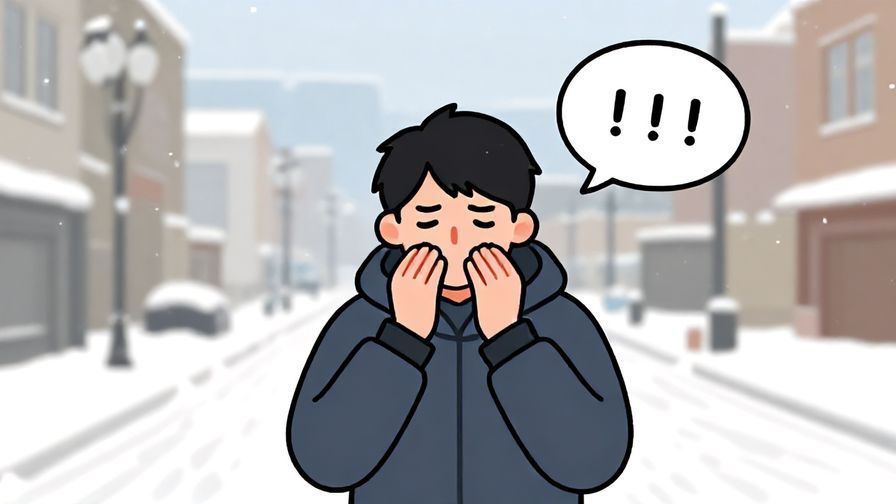
“さぶい” (sabui) is a slangy, shortened version of “寒い.”
People often say “さぶっ!” as a quick way to express coldness.
It’s casual, very informal, and common among friends.
It’s easy to say and adds character to your speech.
Use it to sound playful and spontaneous.
Perfect for texting or chatting casually.
20. 寒っ!(Samui!) – “Cold!” (sharp and short)

This is a clipped, energetic way to say “It’s cold!”
Dropping the sentence ending makes it sound sharp and immediate.
It’s common in casual speech when you’re reacting to a sudden chill.
Try it when you want to sound lively and natural.
It’s a great phrase for quick, casual remarks.
Use it often with friends or family.
21. 寒いっちゅうねん!(Samui chuunen!) – “I’m telling you, it’s cold!” (Kansai dialect)

“っちゅうねん” (chuunen) is a Kansai dialect phrase that adds emphasis, like “I’m telling you.”
This phrase is very casual and humorous.
It’s perfect for joking around or teasing friends about the cold.
Using dialect expressions shows you’re well-versed in regional speech.
It adds personality and fun to your Japanese.
Try it to stand out in conversations!
22. 寒すぎて凍えそう (Samusugite kogoesou) – “It’s so cold I feel like freezing.”

“凍えそう” (kogoesou) means “feel like freezing.”
Combined with “寒すぎて” (too cold), it paints a vivid picture of how cold you feel.
This phrase is casual but expressive and common in spoken Japanese.
It’s great for emphasizing just how cold it is.
Use it with friends when you want to dramatize your discomfort.
It’s a very natural-sounding expression.
23. 寒いわ〜 (Samui wa~) – “It’s cold~” (feminine casual)

“わ” (wa) at the end adds a feminine soft nuance to your sentence.
This phrase is casual and often used by women to express mild discomfort with the cold.
It’s easy to remember and adds a gentle tone.
Try it if you want to sound cute and natural.
It’s common in everyday casual conversations among women.
Great for adding personality to your speech.
24. 寒いやんけ!(Samui yanke!) – “It’s cold, damn it!” (very casual, Kansai)

“やんけ” (yanke) is a rough Kansai dialect ending, adding emphasis and frustration.
This phrase is very informal and regional, used among close friends.
It’s a colorful way to express annoyance about the cold.
Use it only if you’re comfortable with dialects and casual speech.
It’s a phrase that shows strong personality and local flavor.
If you want to sound like a native Kansai speaker, this is a fun one to try!
Concluding Thought
Exploring these 24 ways to say “It’s cold today” in Japanese shows how rich and expressive the language can be. Each phrase carries its own nuance, mood, and social context, giving you powerful tools to connect authentically.
Whether you prefer polite expressions or casual slang, knowing these options will help you navigate conversations comfortably and confidently. Plus, it’s a great way to impress your Japanese friends with your linguistic flair!
So, next time the chilly air hits, you’ll have just the right phrase ready to warm up your talk. Keep practicing, stay cozy, and enjoy your Japanese learning journey!