22 Japanese ways to say “It’s too quiet”
Ever notice how sometimes a place just feels… too quiet? Like, the silence is almost loud? It’s one of those moments when you want to say something but somehow the words just don’t come.
In Japanese, there are plenty of ways to express that feeling of “It’s too quiet,” depending on how casual or formal you want to be. And some even add a little flavor or emotion to the quietness.
Whether you’re chilling with friends, making small talk, or commenting on a peaceful moment, knowing these expressions can come in handy.
Plus, learning different ways to say the same thing helps you sound more natural and keeps your conversations fresh.
So get ready for a cozy dive into 22 warm, casual, polite, and native-like Japanese phrases for “It’s too quiet.”
Let’s make silence a little less awkward, one phrase at a time.
Setting the Scene: Understanding Quietness in Japanese
Quietness isn’t just silence in Japanese culture—it can be peaceful, tense, or even a bit eerie.
That’s why Japanese has a variety of expressions to capture these subtle differences. Some focus on the volume of sound, others on the atmosphere.
Before we jump into the list, it’s good to know a few key words: 静か (shizuka) means “quiet” or “silent,” and 騒がしい (sawagashii) means “noisy.”

Using a great Japanese language learning guide can help you get comfortable with these expressions and add more variety to your conversations.
Once you’re familiar with these basics, you’ll find it easier to pick the right phrase for your mood or situation.
And don’t worry, we’ll keep it simple and fun!
Part 1: Casual Suggestions
1. 静かすぎる (Shizuka sugiru) – “It’s too quiet.”

This is the most straightforward way to say “It’s too quiet.” 静か (shizuka) means “quiet,” and すぎる (sugiru) means “too much” or “excessive.”
Just put them together, and you have “too quiet.” It’s casual but clear, perfect for friends or informal chats.
Try it when you enter a room that feels unusually silent.
It’s a handy phrase that works in many everyday situations.
You might hear people also say 静かすぎて怖い (shizuka sugite kowai) — “It’s too quiet, it’s scary.”
Don’t hesitate to use it when you want to casually point out that awkward silence!
2. シーンとしている (Shīn to shite iru) – “It’s completely silent.”

This expression uses the sound effect シーン (shīn), which represents complete silence, plus している (shite iru) meaning “is doing.”
It’s like saying “It’s totally silent” or “dead quiet.” You’ll often hear it in stories or conversations describing an eerie or peaceful silence.
It’s a fun onomatopoeic phrase that really paints a picture.
People use this to highlight moments when no one is making a sound.
It’s a great phrase to remember when describing quietness in a more expressive way.
Try saying “シーンとしてるね” (shīn to shiteru ne) to friends when the room suddenly feels very quiet.
3. しんと静まり返っている (Shinto shizumari kaette iru) – “It’s utterly silent.”

This phrase is more poetic and descriptive. しんと (shinto) means “deep silence,” and 静まり返っている (shizumari kaette iru) means “returned to silence” or “completely quiet.”
It’s perfect for moments when the silence feels profound, like in nature or late at night.
It’s less casual, but it’s beautiful for storytelling or describing peaceful scenes.
Use it when you want to emphasize the depth of quietness.
It’s a phrase that can help you sound a bit more literary or thoughtful in your Japanese.
Try it when you want to appreciate a serene moment with friends.
4. 静かすぎて落ち着かない (Shizuka sugite ochitsukanai) – “It’s too quiet and unsettling.”

This phrase adds a feeling to the quiet: 落ち着かない (ochitsukanai) means “unsettled” or “uneasy.”
So, it’s not just “too quiet,” but “too quiet to feel calm.”
Perfect for describing awkward or tense silences that make you want to speak up.
It’s casual and relatable—everyone’s felt that awkward quiet before!
Try this phrase when silence feels a little uncomfortable.
It adds emotional depth to your observation of quietness.
5. 音が全然ない (Oto ga zenzen nai) – “There’s no sound at all.”

This one focuses on the absence of sound. 音 (oto) means “sound,” 全然 (zenzen) means “completely” or “not at all” in negative sentences, and ない (nai) means “there isn’t.”
It’s a simple and casual way to say “It’s too quiet” by pointing out the silence.
Great for describing places without any noise, like early mornings or empty streets.
It’s a phrase you’ll hear often because it’s so straightforward.
Try it when you want to comment on how silent a place feels.
It’s a useful phrase for everyday conversation about your surroundings.
6. 何も聞こえない (Nani mo kikoenai) – “I can’t hear anything.”

Literally, this means “Nothing can be heard.” 何も (nani mo) means “nothing,” and 聞こえない (kikoenai) means “cannot hear.”
It’s casual and perfect for expressing that the silence is so complete, you can’t hear a thing.
Try it to emphasize how quiet it is when you expect some noise.
It’s a natural phrase that sounds very conversational.
Great for telling friends that a place feels unusually silent.
Try pairing it with a question, like “何か聞こえる?” (Can you hear something?)
7. 空気が重い (Kuuki ga omoi) – “The atmosphere is heavy.”

This is a more figurative way to say “It’s too quiet.” 空気 (kuuki) means “air” or “atmosphere,” and 重い (omoi) means “heavy.”
It’s used when the quietness feels tense or uncomfortable, like a heavy mood in the room.
It’s perfect for conversations about social situations where silence feels awkward.
Not literally about sound, but about the emotional “weight” of the silence.
Try using this phrase to describe those moments when everyone’s quiet but it’s not peaceful.
This adds a bit of emotional insight to your comment on silence.
8. めっちゃ静か (Meccha shizuka) – “Super quiet.”

This is a super casual and fun way to say “It’s very quiet.” めっちゃ (meccha) means “very” or “super,” used mostly in Kansai dialect but popular everywhere.
It’s perfect for friends or casual settings and sounds very natural.
Use it when you want to emphasize quietness in a lighthearted way.
People often say めっちゃ静かやな! (Meccha shizuka yana!) to mean “It’s super quiet, huh!”
Great for informal chats or texting.
It’s a phrase that’s easy to remember and fun to use.
Part 2: Polite & Formal Suggestions
9. とても静かです (Totemo shizuka desu) – “It’s very quiet.”

This is a polite and straightforward way to say “It’s very quiet.” とても (totemo) means “very,” 静か (shizuka) means “quiet,” and です (desu) adds politeness.
Use this in professional or formal situations, like meetings or polite conversations.
It’s a safe phrase that never sounds rude or casual.
Great for describing quiet environments in a respectful way.
You can also say とても静かですね (totemo shizuka desu ne) to add a soft “isn’t it?”
Perfect for polite observations about your surroundings.
10. 静かすぎますね (Shizuka sugimasu ne) – “It’s too quiet, isn’t it?”

This is a polite way to say “It’s too quiet.” 静かすぎる becomes 静かすぎます in polite form, plus ね (ne) to invite agreement.
It works well in business or formal social settings.
Use it when you want to gently point out the quietness without sounding blunt.
The ね at the end makes it sound friendly and inclusive.
It’s a nice phrase for breaking the silence politely.
Try it in meetings or formal gatherings where the silence feels noticeable.
11. 静寂ですね (Seijaku desu ne) – “It’s silent, isn’t it?”
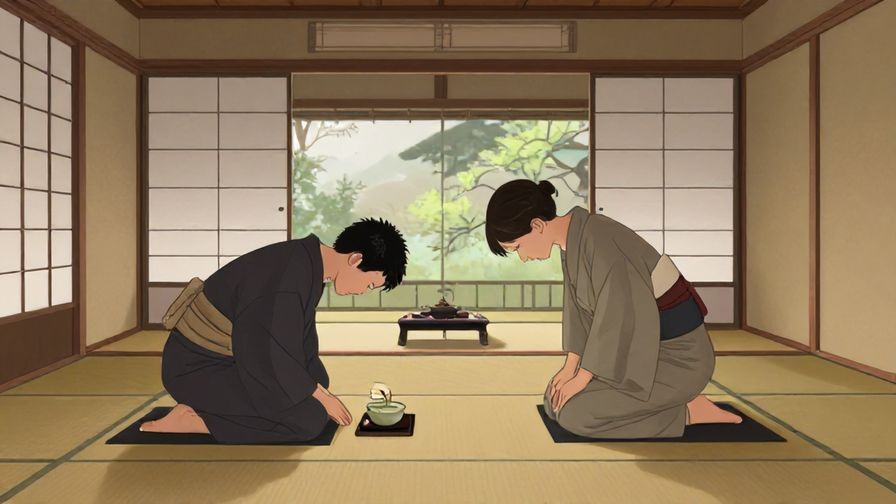
静寂 (seijaku) means “silence” or “quietness” with a formal, almost poetic tone.
Adding ですね (desu ne) makes it polite and conversational.
This phrase is perfect for formal or artistic settings, like a cultural event or museum.
It carries a refined feeling, appreciating the silence as something special.
Try it when you want to sound thoughtful or respectful about the quiet atmosphere.
It’s a beautiful phrase for moments where silence is valued.
12. 静かでございます (Shizuka de gozaimasu) – “It is quiet.” (very formal)

This is an ultra-polite and formal expression, often used in customer service or very formal speech.
静か (shizuka) means “quiet,” and でございます (de gozaimasu) is a very polite version of です (desu).
Use this if you want to be super respectful or professional.
It sounds very proper and might be heard in announcements or formal customer interactions.
It’s a phrase to keep in your pocket if you’re aiming for high-level politeness.
Perfect for formal speeches or hospitality contexts.
13. 静かにしております (Shizuka ni shite orimasu) – “We are keeping it quiet.”

This phrase is polite and indicates ongoing quietness. 静かに (shizuka ni) means “quietly,” and しております (shite orimasu) is a humble polite form of “doing.”
Use it when you want to say that you or your group are intentionally keeping quiet.
It’s common in formal explanations or announcements.
Great for polite requests or describing a quiet environment.
Try it if you’re explaining why the noise level is low.
It’s a respectful way to acknowledge silence.
14. 静かにしてください (Shizuka ni shite kudasai) – “Please be quiet.”

This is a polite request to ask someone to be quiet.
静かに (shizuka ni) means “quietly,” してください (shite kudasai) means “please do.”
Use it to ask for silence without sounding rude.
It’s useful in classrooms, libraries, or any situation where you want to lower noise.
Perfect for learners who want to politely control the atmosphere.
Try it with a gentle tone to keep it friendly.
15. 静かに願います (Shizuka ni negaimasu) – “We kindly ask for quiet.”

This is a very polite and formal way to request quietness.
願います (negaimasu) means “we ask” or “please.”
You’ll often see or hear this in formal public places like museums or theaters.
It’s a respectful way to ask for silence.
Great for formal announcements or polite reminders.
Try this phrase when you want to sound very courteous.
16. 静かに話しましょう (Shizuka ni hanashimashou) – “Let’s speak quietly.”

This phrase politely suggests speaking quietly.
話しましょう (hanashimashou) means “let’s speak.”
It’s perfect for polite group settings where you want to keep noise down.
Use it to encourage gentle conversation.
It’s a friendly and inclusive way to maintain calmness.
Try this when you want to keep the vibe peaceful but social.
Part 3: Very Casual / Native-like Expressions
17. シーンだね (Shīn da ne) – “It’s dead silent.”

This is a casual way to say the place is completely silent.
シーン (shīn) is the sound effect for silence, and だね (da ne) adds a casual “isn’t it?”
It’s great to use with friends when silence is unexpected.
This phrase is very conversational and common in everyday speech.
Try it to lighten up an awkward quiet moment.
It’s a fun way to call out the silence naturally.
18. めっちゃ静かやん (Meccha shizuka yan) – “It’s super quiet, isn’t it?”

Very casual and Kansai dialect influenced, やん (yan) adds a friendly emphasis.
It’s perfect for informal conversations, especially among young people.
Use it to highlight a quiet moment with a bit of charm.
It’s a phrase that feels warm and native-like.
Great for social media or texting.
Try pairing it with a smile to sound approachable and natural.
19. しーんとしてるな (Shīn to shiteru na) – “It’s dead silent, huh.”

This is a relaxed and natural way to comment on silence.
な (na) adds a casual, reflective tone.
It’s great for moments when you want to casually acknowledge the quiet.
Sounds very conversational and relatable.
Try it when you’re with friends or family.
It helps you sound like a native speaker.
20. なんか静かすぎやろ (Nanka shizuka sugiyaro) – “It’s kinda too quiet, right?”

Here, なんか (nanka) means “kind of” or “somehow,” and やろ (yaro) is a casual way to say “right?”
This phrase adds a playful, questioning tone to the observation of quietness.
It’s perfect for casual chats among friends.
You can use it to gently tease the silence.
It’s a very native way to express mild surprise or unease about quietness.
Try it to sound friendly and informal.
21. ここ、めっちゃ静かやん (Koko, meccha shizuka yan) – “It’s super quiet here, huh?”

This is a casual and native-like way to point out silence in a specific place.
ここ (koko) means “here,” combined with the casual emphasis meccha and やん for “isn’t it?”
Great for informal conversations about your immediate surroundings.
It sounds natural and friendly.
Try it to bond over a peaceful or awkward quiet moment.
It’s easy to slip into daily chat.
22. しずまりすぎてやばい (Shizumari sugite yabai) – “It’s way too quiet, it’s crazy.”

This phrase adds slang flair: やばい (yabai) is a popular slang word meaning “crazy” or “extreme.”
It’s a very casual and expressive way to say “It’s too quiet.”
Perfect for young people or close friends.
It adds humor and exaggeration to the observation.
Use it when you want to make the silence feel a bit dramatic and fun.
Try it to lighten the mood during an awkward quiet moment.
Concluding Thought
Exploring different ways to say “It’s too quiet” in Japanese not only expands your vocabulary but also helps you connect better with the culture and people.
From casual and fun to polite and formal, these phrases give you the tools to express how silence feels in many situations.
So next time you feel that too-quiet moment, you’ll know just what to say—and maybe even break the silence with confidence and warmth!