22 Japanese ways to say “Buzzkill”
Ever been at a fun party or hanging out with friends when suddenly someone drops a comment that just kills the vibe? In English, we call that person a “buzzkill.”
But how do you say “buzzkill” in Japanese? Well, it’s not quite a one-to-one translation, but there are plenty of ways to express that feeling when someone ruins the fun.
Japanese has lots of colorful and nuanced expressions that capture the idea of a buzzkill in different contexts and tones.
Whether you want to sound casual or polite, or even a bit native-like, this list will help you get there with 22 Japanese phrases and words you can use.
Learning these can be a fun way to understand Japanese social vibes and how emotions are expressed.
So, let’s dive in and explore how to say “buzzkill” in Japanese, from light teasing to serious mood dampeners.
Understanding the Buzzkill Concept in Japanese
Before we jump into the list, it’s helpful to know that Japanese often uses context rather than direct words to express feelings like “buzzkill.”
The idea of killing a good mood might be described using verbs, adjectives, or slang depending on how casual or serious the situation is.
That’s why you’ll see a wide range of expressions on this list, from polite to playful.

Sometimes, using a great Japanese phrasebook for beginners can give you a perfect starting point for a cohesive understanding.
With a little practice, you’ll be able to spot and use these phrases naturally.
Let’s get started with some casual expressions that you can use among friends.
Part 1: Casual Suggestions
1. 空気を読めない (Kuuki o yomenai) – “Can’t read the air”

This phrase literally means “can’t read the air,” which refers to someone who misses social cues.
It’s a common way to describe someone who unintentionally kills the mood by saying or doing something inappropriate.
It’s casual and often used teasingly among friends.
Remember, “kuuki” means “air” (atmosphere), and “yomenai” means “can’t read.”
A related phrase is 空気が読める (kuuki ga yomeru), meaning “someone who can read the air.”
Use this phrase to lightly call out a buzzkill without being too harsh.
2. 盛り下げる (Morisageru) – “To bring down (the mood)”

“Morisageru” means “to bring down” or “to dampen,” typically used for the mood or atmosphere.
It’s a verb you can use when someone says something that kills the vibe.
It’s simple to remember since “mori” means “to raise,” and “sageru” means “to lower” – so “morisageru” is ironically lowering the excitement.
It’s a versatile word you’ll hear a lot in conversations about parties or fun events.
“Morisasageru” can be used actively (“You’re morisageru-ing the party!”) or passively (“The mood got morisageru-ed.”)
Try to use it in casual chats to sound natural and expressive.
3. 水を差す (Mizu o sasu) – “To pour water (on something)”
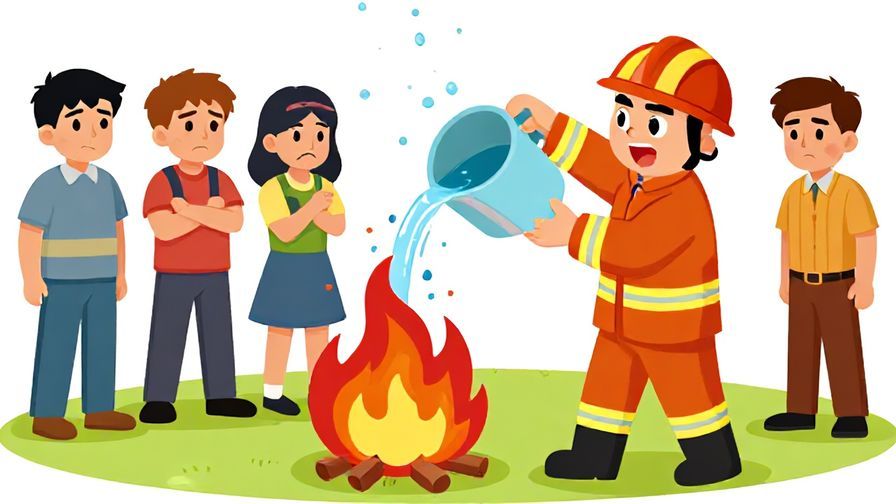
This idiom literally means “to pour water,” like putting out a fire, and is used metaphorically to mean “ruining the fun.”
It’s a very common phrase to describe a buzzkill moment.
It’s easy to visualize, making it a great mnemonic for learners.
“Mizu o sasu” captures the feeling of someone spoiling the excitement or enthusiasm.
You might say, “He poured water on our plans” to express that someone was a buzzkill.
Use this phrase to describe situations where enthusiasm is suddenly dampened.
4. 場をシラけさせる (Ba o shirakesaseru) – “To make the place go cold”

“Ba” means “place” or “scene,” and “shirakeru” means to become cold or dull.
“Ba o shirakesaseru” means to kill the vibe or make the atmosphere awkward and cold.
This is a bit more descriptive and often used in casual or semi-formal settings.
It’s perfect for when someone says something that causes silence or discomfort.
The phrase is a bit long, but breaking it down helps: “ba” (place), “shirake” (cold/dull), and “saseru” (to cause).
Use it when you want to express how someone’s words or actions cooled down the mood.
5. 雰囲気を壊す (Fun’iki o kowasu) – “To break the atmosphere”

“Fun’iki” means “atmosphere,” and “kowasu” means “to break.”
This phrase literally means “to break the atmosphere,” which perfectly fits the buzzkill vibe.
It’s straightforward and useful in many social situations.
You can use it casually to describe when someone ruins the fun or awkwardly interrupts the good mood.
It’s easy to remember since “kowasu” is a common verb meaning “to break.”
Try using it next time you want to say someone spoiled the vibe.
6. 冷める (Sameru) – “To cool down”

“Sameru” means “to cool down,” often used for feelings or enthusiasm.
When something “sameru,” the excitement or mood fades away.
This verb is often used to describe the feeling after a buzzkill moment.
It’s short and easy to use in both casual and polite speech.
For example, “みんなの気持ちが冷めた” (Minna no kimochi ga sameta) means “Everyone’s feelings cooled down.”
Great for describing the aftermath of a buzzkill.
7. つまらなくする (Tsumaranaku suru) – “To make (something) boring”

“Tsumaranai” means “boring,” and “suru” means “to do/make.”
Use “tsumaranaku suru” to say someone made something boring or killed the fun.
It’s a straightforward expression, easy for beginners to grasp.
Perfect for casual contexts where you want to say the buzzkill made the event dull.
For example, “彼が場をつまらなくした” (Kare ga ba o tsumaranaku shita) means “He made the place boring.”
Simple and clear for everyday use.
8. 盛り下がる (Morisagaru) – “To lose excitement”

“Morisagaru” is the opposite of “morisageru,” meaning “to lose excitement” or “to deflate.”
It describes the mood fading or the energy dropping, a common result of a buzzkill.
It’s a handy word to describe the vibe going downhill naturally or suddenly.
Use it casually with friends to explain how fun suddenly disappeared.
For example, “パーティーが盛り下がった” (Paatii ga morisagatta) means “The party lost its energy.”
Memorize it as the “mood going down” word.
Part 2: Polite & Formal Suggestions
9. 雰囲気を壊してしまう (Fun’iki o kowashite shimau) – “Unintentionally break the atmosphere”

This is a polite and formal way to say someone unintentionally ruined the mood.
“Shimau” adds a nuance of regret or unintended consequence.
Useful in workplace or formal social settings to soften the impact.
For example, “申し訳ありません、雰囲気を壊してしまいました” (Moushiwake arimasen, fun’iki o kowashite shimaimashita) means “I’m sorry for ruining the atmosphere.”
It’s respectful and shows awareness of social harmony.
Great for professional or serious conversations about a buzzkill moment.
10. 場を和ませない (Ba o nagomasenai) – “Not to lighten the mood”

“Nagomasenai” means “not to soothe” or “not to lighten.”
This phrase describes someone failing to keep things light or fun.
It’s polite and fits formal or semi-formal situations.
You can say “彼は場を和ませない” (Kare wa ba o nagomasenai) to mean “He doesn’t lighten the mood.”
It’s a gentle way to critique a buzzkill without sounding harsh.
Perfect for workplace or polite social groups.
11. 雰囲気を悪くする (Fun’iki o waruku suru) – “To make the atmosphere bad”

“Waruku suru” means “to make bad.”
This phrase is straightforward and polite enough for formal contexts.
It clearly states that someone spoiled the atmosphere.
Useful when you want to be direct but still respectful.
Example: “彼の発言が雰囲気を悪くしました” (Kare no hatsugen ga fun’iki o waruku shimashita) means “His comment made the atmosphere bad.”
Great for describing buzzkill moments professionally.
12. 楽しさを損なう (Tanoshisa o sokonau) – “To spoil the fun”

“Sokonau” means “to damage” or “to spoil.”
Combined with “tanoshisa” (fun), it means “to spoil the fun.”
This phrase is polite and descriptive.
Say “その発言は楽しさを損ないました” (Sono hatsugen wa tanoshisa o sokonaimashita) for “That comment spoiled the fun.”
It works well in polite conversations and writing.
Good to use if you want to be clear but gentle.
13. 雰囲気を乱す (Fun’iki o midasu) – “To disturb the atmosphere”

“Midasu” means “to disturb” or “to disrupt.”
This phrase politely conveys that someone disturbed the atmosphere.
It’s a bit stronger than “kowasu” but still polite.
Example: “彼の態度が雰囲気を乱しました” (Kare no taido ga fun’iki o midashimashita) means “His attitude disturbed the atmosphere.”
Use it in formal or semi-formal contexts.
Good for situations where the buzzkill was more noticeable.
14. 空気を悪くする (Kuuki o waruku suru) – “To spoil the air/atmosphere”

This phrase highlights spoiling the “air” or atmosphere.
It’s polite and commonly used in workplace or group settings.
“Kuuki” means “air,” and “waruku suru” means “to make bad.”
Example: “彼女の発言が空気を悪くしました” (Kanojo no hatsugen ga kuuki o waruku shimashita) means “Her comment spoiled the atmosphere.”
A useful phrase for professional or social buzzkill moments.
Easy to remember with “kuuki” as the vibe or mood.
15. 雰囲気を損なう (Fun’iki o sokonau) – “To harm the atmosphere”

Similar to “tanoshisa o sokonau,” this phrase focuses on harming the atmosphere itself.
It’s polite and useful in formal situations.
Say “彼の行動が雰囲気を損ないました” (Kare no koudou ga fun’iki o sokonaimashita) to mean “His actions harmed the atmosphere.”
Great for explaining buzzkill moments without blame.
Perfect for writing or polite speech.
Consider it a softer way to say “buzzkill” formally.
16. 盛り下がらせる (Morisagaraseru) – “To make (something) lose excitement”

“Morisagaraseru” is the causative form of “morisagaru,” meaning “to cause something to lose excitement.”
It’s polite and descriptive, useful in formal or semi-formal contexts.
Example: “彼がパーティーを盛り下がらせました” (Kare ga paatii o morisagarasemashita) means “He caused the party to lose excitement.”
Use this to politely point out the buzzkill’s effect.
It’s a bit longer but sounds natural in formal speech.
Good for professional feedback or polite critiques.
Part 3: Very Casual / Native-like Expressions
17. しらける (Shirakeru) – “To lose interest or enthusiasm”

“Shirakeru” means “to lose interest” or “to become cold.”
It’s often used casually to describe a buzzkill moment where people suddenly lose enthusiasm.
Great for everyday conversations with friends.
For example, “あの話でみんながしらけた” (Ano hanashi de minna ga shiraketa) means “Everyone lost interest because of that story.”
Short and native-like, perfect for informal chats.
Try this one out to sound more like a local!
18. ブスッとする (Busutto suru) – “To sulk or be moody”

This phrase literally means “to sulk” or “to be in a bad mood.”
While not a direct “buzzkill,” it describes the vibe killer’s mood that dampens fun.
“Busutto suru” is very casual and often used among friends.
Example: “彼はすぐにブスッとする” (Kare wa sugu ni busutto suru) means “He sulks quickly.”
It’s a playful way to describe someone who kills the mood by being grumpy.
Perfect for informal and humorous situations.
19. 空気ぶち壊し (Kuuki buchikowashi) – “Total vibe breaker”

This slangy phrase means “total vibe breaker” or “complete buzzkill.”
“Buchikowashi” means “smash” or “destroy,” making it a strong, casual expression.
It’s very informal and used mainly among young people.
Example: “あいつは空気ぶち壊しだよ” (Aitsu wa kuuki buchikowashi da yo) means “That guy is a total buzzkill.”
Use it carefully, as it sounds strong and a bit rude.
Great for casual conversations when you want to be blunt and funny.
20. せっかくの雰囲気をぶち壊す (Sekkaku no fun’iki o buchikowasu) – “To smash the hard-earned atmosphere”

“Sekkaku” means “with great effort” or “hard-earned.”
This phrase highlights how someone ruins a mood that took effort to create.
It’s casual but expressive and native-like.
Example: “せっかくの雰囲気をぶち壊すなよ!” (Sekkaku no fun’iki o buchikowasu na yo!) means “Don’t ruin the mood we worked so hard for!”
It’s a great phrase to show frustration playfully.
Use it with close friends or in humorous settings.
21. ノリを悪くする (Nori o waruku suru) – “To spoil the vibe”

“Nori” means “vibe” or “groove.”
This phrase means “to spoil the vibe,” a casual and popular expression.
It’s perfect for friends or informal situations.
Example: “そんなこと言ってノリを悪くしないで” (Sonna koto itte nori o waruku shinaide) means “Don’t say that and spoil the vibe.”
Easy to say and very natural in everyday talk.
Great for gently calling out a buzzkill.
22. 盛り下げ野郎 (Morisage yarou) – “Buzzkill guy”

“Yarou” is a rough word for “guy” or “fellow,” often used jokingly.
“Morisage yarou” translates to “buzzkill guy,” a playful insult among friends.
Use it only with close friends who understand your humor.
Example: “お前は本当に盛り下げ野郎だな” (Omae wa hontou ni morisage yarou da na) means “You’re such a buzzkill guy.”
It combines “morisageru” (to bring down) with “yarou.”
Fun and casual for teasing in relaxed settings.
Concluding Thought
Exploring these Japanese expressions for “buzzkill” shows how rich and nuanced the language is when it comes to social vibes.
From casual slang to polite phrases, you get a sense of the culture’s focus on harmony and subtlety.
Next time someone kills the mood, you’ll be ready with just the right phrase to express it, keeping your Japanese fresh and relatable!