22 Japanese ways to say “You’re ruining the vibe”
Ever been in a situation where someone just kills the mood? You know, that moment when the fun suddenly fizzles out?
It’s a bit awkward, right? Luckily, Japanese has some great ways to express that feeling with style and nuance.
From casual to polite, there are plenty of phrases to help you say “You’re ruining the vibe” without sounding too harsh.
Whether you’re chatting with friends or trying to keep things smooth at a party, these expressions will come in super handy.
Learning these phrases not only boosts your Japanese skills but also helps you navigate social situations more naturally.
So, let’s dive into 22 Japanese ways to say “You’re ruining the vibe,” and make your conversations flow better!
Understanding the Mood Killers in Japanese
Before jumping into the phrases, it helps to know the cultural context behind “ruining the vibe.”
In Japan, harmony (和, wa) is super important, so people often express things subtly to avoid conflict.
This means many phrases might not directly say “You’re ruining it,” but instead hint at it gently or humorously.

Sometimes, using a great beginner phrasebook can give you a perfect starting point for a cohesive understanding.
Keep this in mind as you explore the list below—it’s all about keeping the good vibes alive with just the right words.
Ready to learn? Let’s get started!
Part 1: Casual Suggestions
1. 空気読めないよ (Kuuki yomenai yo) – “You can’t read the atmosphere.”

This is a classic way to say someone isn’t picking up on social cues or the mood.
“Kuuki” means “air” or “atmosphere,” “yomenai” is “can’t read,” and “yo” adds emphasis. It’s casual but can be playful or slightly critical.
It’s great among friends when you want to lightly point out that someone’s out of sync with the vibe.
Use it with a smile to keep things friendly!
Similar phrases include “空気読めてない (Kuuki yometenai),” which is a softer version.
Next time the mood dips, this phrase is your go-to for a gentle vibe check.
2. 盛り下がるよ (Mori sagaru yo) – “You’re bringing the mood down.”

“Mori sagaru” literally means “the excitement drops.”
It’s a straightforward way to tell someone their behavior is killing the fun, but it’s still casual and not too harsh.
Adding “yo” at the end makes it sound like a friendly warning.
Perfect for informal settings where you want to keep the mood light.
You can also say “盛り下げないで (Mori sagenaide)” to mean “Don’t bring the mood down.”
Try it next time your group needs a little pep talk!
3. そんなこと言わないでよ (Sonna koto iwanaide yo) – “Don’t say that kind of thing.”

This phrase is a gentle way to ask someone to stop saying negative or vibe-killing things.
“Sonna koto” means “that kind of thing,” “iwanaide” is “don’t say,” and “yo” adds a casual emphasis.
It’s perfect when words are ruining the mood more than actions.
Great for keeping conversations positive and upbeat.
You might hear “やめてよ (Yamete yo)” as a shorter, more casual version meaning “Stop it.”
Use this to softly steer people back on track without confrontation.
4. ノリ悪いね (Nori warui ne) – “You’re no fun.”

“Nori” means “mood” or “energy,” and “warui” means “bad.”
This phrase points out that someone’s not matching the group’s energy or enthusiasm.
It’s casual and often teasing, so it works well with close friends.
Adding “ne” softens it, making it sound more like a friendly jab.
Use this when someone’s being a downer but you want to keep it light-hearted.
It’s an easy phrase to remember and quite common in everyday Japanese.
5. 変な空気になっちゃった (Hen na kuuki ni nacchatta) – “It got weird.”
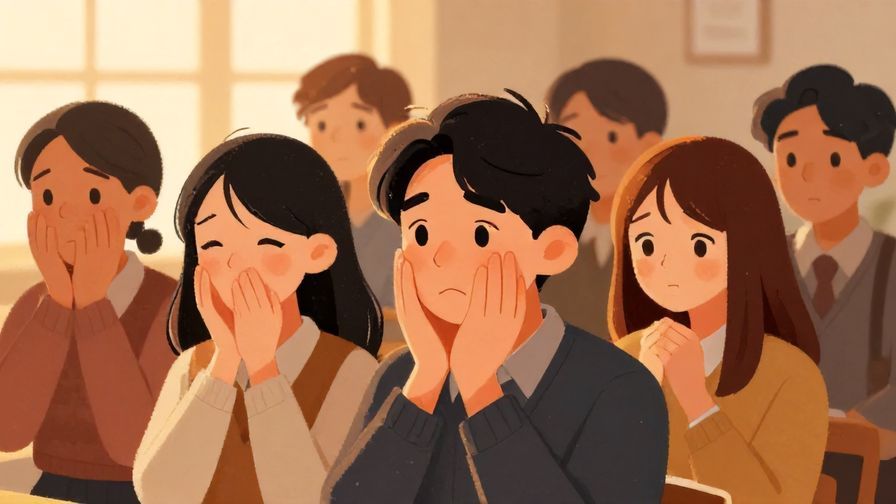
This phrase is a casual way to say the atmosphere has turned awkward or uncomfortable.
“Hen na” means “strange,” “kuuki” is “atmosphere,” and “nacchatta” is a casual past form of “became.”
It’s a great way to hint that someone has unintentionally spoiled the mood.
Use it to bring awareness to the vibe without blaming anyone directly.
It’s a soft, indirect way to say “You’re ruining the vibe” in a group setting.
Great for lightening the mood after a slip-up!
6. なんか違うよね (Nanka chigau yo ne) – “Something’s off, right?”

This phrase is a casual, indirect way to express that the vibe feels off or strange.
“Nanka” means “somehow,” “chigau” means “different” or “off,” and “yo ne” adds a confirming tone.
It’s perfect for hinting that someone’s behavior is affecting the mood without pointing fingers.
It invites agreement and opens the door for gentle correction.
A great phrase to ease into a conversation about vibe-killing moments.
Use it to keep things smooth and avoid direct confrontation.
7. ちょっと空気壊してるかも (Chotto kuuki kowashiteru kamo) – “You might be breaking the mood a little.”

This is a soft and slightly self-deprecating way to tell someone they may be ruining the vibe.
“Chotto” means “a little,” “kuuki” is “atmosphere,” “kowashiteru” is “breaking,” and “kamo” means “maybe.”
It’s a polite and indirect expression, good for sensitive situations.
It leaves room for the other person to adjust without feeling attacked.
Perfect for delicate social dynamics.
Try this phrase to keep harmony while addressing the mood.
8. そんな感じじゃないよ (Sonna kanji janai yo) – “That’s not really the vibe.”

This phrase gently tells someone their behavior or words don’t fit the current mood.
“Sonna kanji” means “that kind of feeling,” “janai” is “not,” and “yo” adds casual emphasis.
It’s friendly and non-confrontational, great for steering conversations back on track.
You can use it when someone’s offbeat or too serious for the moment.
Helps maintain the group’s energy without direct criticism.
A useful phrase for everyday socializing.
Part 2: Polite & Formal Suggestions
9. 雰囲気を壊してしまってすみません (Fun’iki o kowashite shimatte sumimasen) – “Sorry for ruining the atmosphere.”
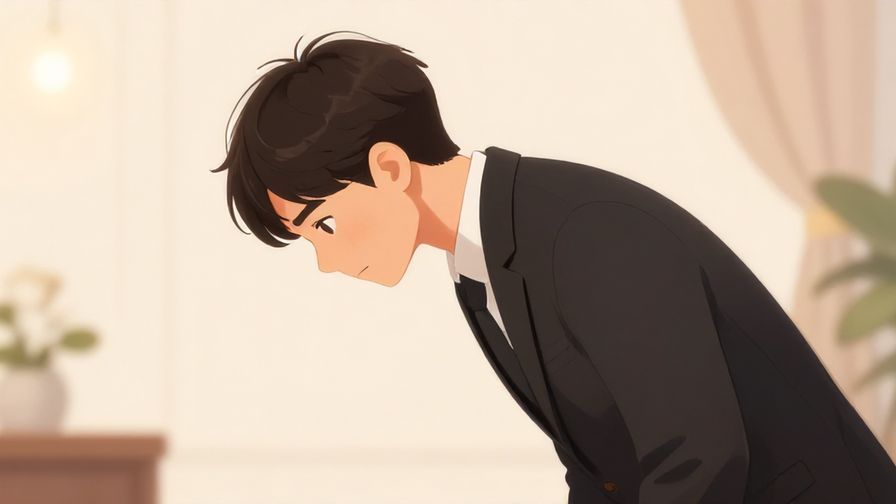
This phrase is a formal apology acknowledging that you’ve spoiled the mood.
“Fun’iki” means “atmosphere,” “kowashite shimatte” is “have ruined,” and “sumimasen” is “sorry.”
It’s useful in work or formal social situations where politeness is key.
Taking responsibility like this helps mend relationships smoothly.
Consider this phrase when you need to apologize for an awkward moment.
It shows respect and awareness of social harmony.
10. 雰囲気を悪くしてしまい申し訳ありません (Fun’iki o waruku shite shimai moushiwake arimasen) – “I deeply apologize for spoiling the atmosphere.”

A very polite, formal apology for causing a bad atmosphere.
“Waruku shite shimai” means “have made it bad,” and “moushiwake arimasen” is a humble “I am sorry.”
Best used in professional or serious social contexts.
This phrase conveys deep regret and responsibility.
Good to know for business Japanese or formal events.
It helps restore harmony after a disruption.
11. 雰囲気を壊すようなことは控えましょう (Fun’iki o kowasu you na koto wa hikaemashou) – “Let’s refrain from doing things that ruin the atmosphere.”

This phrase politely suggests avoiding behavior that spoils the mood.
It’s a gentle way to remind a group to keep harmony.
“Hikaemashou” means “let’s refrain,” making it inclusive and polite.
Great for meetings, classes, or formal parties.
It promotes group awareness without singling anyone out.
Use this to encourage better group dynamics smoothly.
12. 雰囲気を乱すのはやめてください (Fun’iki o midasu no wa yamete kudasai) – “Please stop disturbing the atmosphere.”

A polite but firm request to stop ruining the vibe.
“Midasu” means “disturb” or “disrupt,” and “yamete kudasai” is “please stop.”
Useful in formal or semi-formal situations where directness is needed politely.
It balances respect with clarity.
Use this phrase if subtle hints aren’t working.
It’s best to say it calmly to avoid escalating tension.
13. 皆さんの雰囲気を大切にしましょう (Minasan no fun’iki o taisetsu ni shimashou) – “Let’s cherish everyone’s atmosphere.”

This positive phrase encourages everyone to value the group’s good mood.
“Taisetsu ni shimashou” means “let’s cherish” or “take care of.”
It’s a great way to promote harmony without pointing fingers.
Perfect for leaders or hosts who want to keep things smooth.
It subtly reminds people to avoid ruining the vibe.
Use it to create a cooperative atmosphere.
14. 雰囲気を損なわないように気をつけてください (Fun’iki o sokonawanai you ni ki o tsukete kudasai) – “Please be careful not to spoil the atmosphere.”

A polite request to be mindful of the atmosphere.
“Sokonawanai you ni” means “so as not to spoil,” and “ki o tsukete kudasai” is “please be careful.”
Useful in work or formal social settings.
This phrase encourages awareness without accusing.
Good for delicate situations or new acquaintances.
It helps maintain peace smoothly.
15. 雰囲気を壊さないようにお願いします (Fun’iki o kowasanai you ni onegaishimasu) – “Please don’t ruin the atmosphere.”

A polite but straightforward request not to disrupt the mood.
“Onegaishimasu” adds a respectful “please” to the sentence.
Good for formal or semi-formal contexts.
It’s clear but not harsh.
Use this when you want to maintain professionalism and harmony.
It’s effective for group settings.
16. 雰囲気を大事にしましょう (Fun’iki o daiji ni shimashou) – “Let’s value the atmosphere.”

This phrase is a positive invitation to keep the good vibe alive.
“Daiji ni shimashou” means “let’s cherish” or “value.”
It’s polite but friendly, great for social or work gatherings.
Helps foster group unity.
Use this to gently remind everyone to be considerate.
It promotes a cooperative mindset with kindness.
Part 3: Very Casual / Native-like Expressions
17. マジで雰囲気ぶち壊し (Maji de fun’iki buchikowashi) – “Seriously killing the vibe.”

This is a very casual, slangy way to say someone is totally ruining the mood.
“Maji de” means “seriously,” “buchikowashi” is a strong slang term meaning “smash” or “break brutally.”
Use among close friends when you want to be blunt but humorous.
It’s not polite, so best saved for informal settings.
Great for venting but be careful not to offend.
It’s a phrase that native speakers often use to keep things real.
18. 空気読めてないっしょ (Kuuki yometenai ssho) – “You’re totally missing the vibe.”

A slangy, playful way to say someone can’t read the atmosphere at all.
“Ssho” is a casual sentence-ending particle used by younger people for emphasis.
It’s informal and best used among friends.
Can come off as teasing or slightly criticizing.
Good for calling out vibe-killers in a lighthearted way.
Use this when you want to keep it casual and fun.
19. そんな空気じゃないんだよね (Sonna kuuki janain da yo ne) – “That’s not the vibe, you know?”

This phrase casually tells someone their behavior doesn’t fit the mood.
“Janain da yo ne” adds a conversational tone implying shared understanding.
It’s very natural and native-like.
Great for everyday conversations with friends or coworkers.
Helps keep the mood without being confrontational.
Try this when you want to hint gently that something’s off.
20. 雰囲気台無しだよ (Fun’iki dainashi da yo) – “You totally ruined the vibe.”

“Dainashi” means “totally ruined” or “wiped out.”
This phrase is blunt but common among friends.
It’s casual but carries a strong message.
Use it for clear communication when the vibe is badly broken.
Good for venting frustration without being overly harsh.
Be ready for a playful comeback!
21. 雰囲気ぶち壊してるってば (Fun’iki buchikowashiterutteba) – “I’m telling you, you’re killing the vibe.”

A very casual and emphatic phrase using “tteba,” which adds insistence.
“Buchikowashiteru” means “smashing” or “breaking badly.”
Used when you want to be clear but keep it friendly.
Great for teasing close friends about their vibe-killing habits.
Not polite, so save for informal contexts.
Use it to keep the energy honest and lively.
22. いい加減にしてよ、雰囲気ぶち壊し! (Ii kagen ni shite yo, fun’iki buchikowashi!) – “Cut it out already, you’re ruining the vibe!”

This is a direct, emotional way to tell someone to stop ruining the mood.
“Ii kagen ni shite yo” means “Cut it out already,” and it’s quite forceful.
“Fun’iki buchikowashi” emphasizes the damage to the vibe.
Best used with close friends who understand your tone.
It’s strong but can be playful depending on delivery.
Use this to express frustration clearly and quickly.
Concluding Thought
Expressing “You’re ruining the vibe” in Japanese offers a fascinating glimpse into how culture shapes communication.
From soft hints to direct calls, there’s a phrase for every mood and relationship.
With these 22 expressions, you’re now ready to keep your conversations smooth and your atmosphere just right. Ganbatte!