22 Japanese ways to say “You’re killing the mood”
Ever been in a lively conversation or fun hangout, only to have the vibe suddenly crash? Yeah, “You’re killing the mood” is a phrase we all want to say—but in Japanese, it can be a bit more nuanced and playful.
Whether you want to sound casual among friends or keep it polite at work, Japanese has a variety of ways to express this feeling. It’s not just about the words, but how you say them that really matters.
In this list, you’ll find 22 ways to say “You’re killing the mood” in Japanese, from light teasing to more formal expressions. We’ll break down each phrase with pronunciation guides and simple explanations.
Understanding these phrases can help you navigate social situations smoothly and even add a bit of humor when the mood dips.
Plus, learning these expressions will give you a glimpse into Japanese culture’s subtle approach to social cues and feelings.
Ready to keep the atmosphere alive? Let’s dive in!
Setting the Stage: Why These Phrases Matter
Before jumping into the list, it’s good to understand why Japanese has so many ways to say something like “You’re killing the mood.”
Japanese culture values harmony (和, wa), so direct confrontation is often softened or avoided. These phrases let you express frustration or disappointment without being harsh.
That way, you maintain good vibes even when you need to point out a mood-killer.

Sometimes, a great phrasebook about conversation can help you catch these nuances quickly.
Keep in mind, tone and context are everything here.
Now, let’s explore the phrases!
Part 1: Casual Suggestions
1. 空気読めないよ (Kuuki yomenai yo) – “You can’t read the atmosphere.”

This is the classic way to say someone isn’t picking up on the mood or vibe.
“空気” (kuuki) means “air” or “atmosphere,” and “読めない” (yomenai) means “can’t read.” Adding “よ” (yo) makes it casual and slightly teasing.
It’s useful when a friend says or does something awkward during a fun moment.
Short and direct, but still lighthearted.
A related phrase is “空気読めてる?” (Kuuki yometeru?) meaning “Are you reading the atmosphere?”
Using this phrase helps keep things playful but clear that someone’s mood-killing.
2. なんでそんなこと言うの? (Nande sonna koto iu no?) – “Why do you say that?”

This phrase expresses mild surprise at a mood-breaking comment.
“なんで” (nande) means “why,” and “そんなこと” (sonna koto) is “such a thing,” with “言うの” (iu no) meaning “say?”
It’s a gentle way to call out someone without being confrontational.
Try this when a friend unintentionally spoils the fun with a blunt comment.
Remember, tone is key: keep it curious, not angry.
It’s an easy phrase to practice and sounds natural in many situations.
3. 雰囲気台無しだよ (Fun’iki dainashi da yo) – “You ruined the atmosphere.”

This is a straightforward phrase with a bit more punch.
“雰囲気” (fun’iki) means “atmosphere,” “台無し” (dainashi) means “ruined,” and “だよ” (da yo) adds casual emphasis.
Use it when someone’s action or words clearly bring down the vibe.
It’s direct but still conversational.
You might hear “雰囲気ぶち壊し” (fun’iki buchikowashi) as a stronger alternative.
Perfect for friendly teasing among close friends.
4. 盛り下がるよ (Mori sagaru yo) – “You’re bringing us down.”

“盛り上がる” (mori agaru) means “to get excited,” so “盛り下がる” (mori sagaru) is the opposite: “to go down.”
Adding “よ” (yo) makes it a casual comment.
It’s a friendly way to say someone’s killing the excitement.
Try this when the fun is fading because of a certain comment or mood.
It’s easy to remember by associating “mori” (盛り) with “party energy.”
Great for casual conversations with friends.
5. せっかくの雰囲気が… (Sekkaku no fun’iki ga…) – “The hard-earned atmosphere is…”

“せっかく” (sekkaku) means “with effort” or “hard-earned.”
This phrase hints that the good mood was carefully built but is now fading.
It’s a softer, more indirect way to say “You’re killing the mood.”
Good for when you want to express disappointment without blaming.
It works well in group settings where everyone pitched in to create a fun vibe.
Try to use it when you want to be polite but honest.
6. ちょっと空気悪いよ (Chotto kuuki warui yo) – “The atmosphere’s a bit bad.”

“空気悪い” (kuuki warui) literally means “bad atmosphere.”
Adding “ちょっと” (chotto) softens the statement to “a bit bad.”
This phrase is casual and commonly used among friends to hint that something’s off.
It’s great for pointing out mood-killing without sounding harsh.
Use it when you want to gently call attention to the vibe.
It’s simple and effective for everyday conversation.
7. 話が重いよ (Hanashi ga omoi yo) – “The conversation is heavy.”

“話” (hanashi) means “talk” or “story,” and “重い” (omoi) means “heavy.”
This phrase points out when a conversation is too serious or depressing for the current mood.
It’s a polite way to say someone’s topic is killing the fun.
Try this when someone keeps bringing up sad or stressful subjects unexpectedly.
It’s a useful phrase to keep things light.
Also good to remind someone gently to change the topic.
8. 盛り上がりに水を差すなよ (Moriagari ni mizu o sasu na yo) – “Don’t pour water on the excitement.”

This phrase uses the metaphor of “pouring water” (水を差す, mizu o sasu) to kill a good vibe.
“盛り上がり” (moriagari) means “excitement” or “getting hyped.”
It’s a vivid and common idiom to tell someone not to ruin the mood.
Adding “なよ” (na yo) makes it casual but firm.
Great for playful scolding among friends.
Easy to remember because of the water metaphor!
Part 2: Polite & Formal Suggestions
9. 雰囲気を壊してしまってすみません (Fun’iki o kowashite shimatte sumimasen) – “Sorry for ruining the atmosphere.”

This is a humble, apologetic way to admit you killed the mood.
“雰囲気を壊してしまって” (fun’iki o kowashite shimatte) means “having ruined the atmosphere,” and “すみません” (sumimasen) is “sorry.”
Use this in formal or work settings when you want to acknowledge your impact politely.
It shows awareness and respect for the group’s feeling.
Good for moments when you accidentally bring down a meeting or event.
Politeness goes a long way in Japanese culture!
10. 雰囲気が悪くなってしまいましたね (Fun’iki ga waruku natte shimaimashita ne) – “The atmosphere has unfortunately become bad, hasn’t it?”

This phrase gently points out a mood shift without blaming anyone.
“悪くなってしまいました” (waruku natte shimaimashita) means “has unfortunately become bad.”
Adding “ね” (ne) invites agreement politely.
It’s perfect for diplomatic situations where directness is avoided.
You can use this to subtly suggest that things could be better.
A thoughtful phrase for workplace conversations.
11. 皆さんの雰囲気を壊してしまったかもしれません (Minasan no fun’iki o kowashite shimatta kamoshiremasen) – “I may have ruined everyone’s atmosphere.”

This is a very polite and self-reflective way to apologize for killing the mood.
“かもしれません” (kamoshiremasen) means “may” or “might,” softening the statement.
It shows humility and care for others’ feelings.
Great for formal apologies or when you want to mend the atmosphere.
Use it when you think your comment or action was off.
It’s a respectful phrase that helps smooth over awkward moments.
12. 雰囲気が乱れてしまい申し訳ありません (Fun’iki ga midarete shimai moushiwake arimasen) – “I’m very sorry for disturbing the atmosphere.”

This phrase is very formal and used in serious contexts.
“乱れてしまい” (midarete shimai) means “disturbed,” and “申し訳ありません” (moushiwake arimasen) is a deep apology.
Perfect for business or formal social events.
It clearly acknowledges the impact without excuses.
Use it sparingly—it’s quite strong!
Knowing this phrase shows you understand social responsibility.
13. 雰囲気を悪くしてしまって申し訳ありません (Fun’iki o waruku shite shimatte moushiwake arimasen) – “I’m sorry for making the atmosphere bad.”

This is a polite way to take responsibility for killing the mood.
It combines “making bad” (悪くしてしまって) with a sincere apology.
Use this when you want to mend relationships professionally.
It’s formal but shows sincere regret.
Great phrase to learn if you often attend Japanese events or meetings.
Practice it to sound natural and respectful.
14. 雰囲気を損ねてしまい申し訳ございません (Fun’iki o sokonete shimai moushiwake gozaimasen) – “I deeply apologize for ruining the atmosphere.”
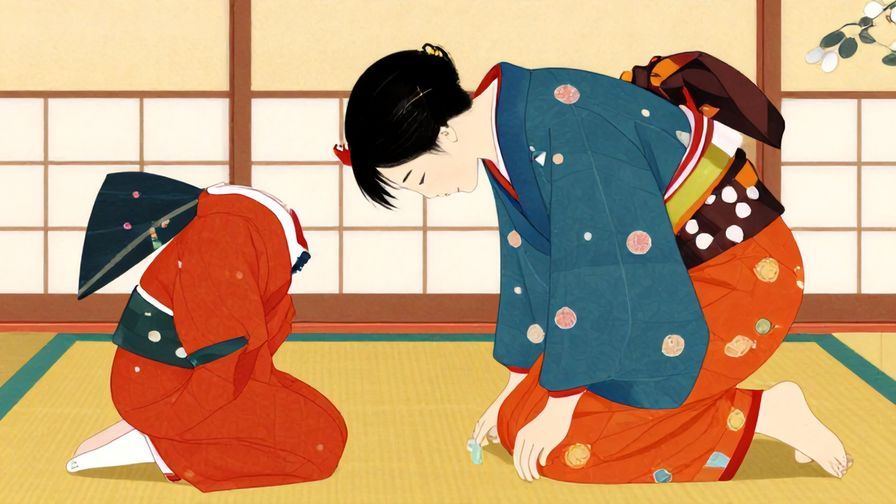
This phrase is extremely polite and formal.
“損ねる” (sokoneru) is a formal word for “damage” or “harm.”
“申し訳ございません” (moushiwake gozaimasen) is the most humble form of apology.
Use it in very serious or official situations.
It’s good to know for advanced learners or business contexts.
Mastering this shows great cultural respect.
15. 雰囲気が悪くなってしまい申し訳ありません (Fun’iki ga waruku natte shimai moushiwake arimasen) – “I apologize for the atmosphere becoming bad.”

This is a polished way to apologize for a bad mood shift.
It’s polite and suitable for business or formal social settings.
Use it to show awareness and regret without being too direct.
It helps to keep peace and professionalism.
Good phrase to add to your formal vocabulary.
Practice it in context to sound natural and sincere.
16. 雰囲気を壊してしまい申し訳ありませんでした (Fun’iki o kowashite shimai moushiwake arimasen deshita) – “I sincerely apologized for having ruined the atmosphere.”

This is a past tense formal apology, showing you already feel sorry.
It’s useful when addressing an incident that’s over but still needs acknowledgment.
Perfect for serious social or work occasions.
Helps restore harmony and trust.
Excellent phrase to learn for professional settings.
Use it with a respectful tone.
Part 3: Very Casual / Native-like Expressions
17. ムードぶち壊しだよ (Moodo buchikowashi da yo) – “You totally wrecked the mood.”

This phrase is very casual and native sounding.
“ムード” (moodo) means “mood,” and “ぶち壊し” (buchikowashi) means “totally wrecked.”
It’s perfect for close friend groups who don’t mind blunt teasing.
Great when you want to be funny and honest.
Use with caution around people you don’t know well.
It’s a fun phrase to add some spice to casual chats.
18. 空気ぶち壊し (Kuuki buchikowashi) – “Mood killer.”

This short phrase is blunt and slangy.
“空気” (kuuki) is “atmosphere,” and “ぶち壊し” (buchikowashi) means “destroy.”
Use it when someone really kills the fun.
Common among younger speakers and close friends.
It’s a go-to for quick mood call-outs.
Try to soften your tone if you want to keep it friendly.
19. ノリ悪いなあ (Nori warui naa) – “You’re no fun.”

“ノリ” (nori) means “vibe” or “mood,” and “悪い” (warui) means “bad.”
Adding “なあ” (naa) makes it conversational and slightly playful.
It’s like telling someone they’re not getting into the spirit.
Use it with friends when someone’s being a downer.
It’s a lighthearted way to tease without offending.
Great phrase for casual social settings.
20. ダメだよ、それ (Dame da yo, sore) – “No, that’s not okay.”

“ダメ” (dame) means “no good” or “not allowed.”
“それ” (sore) means “that.”
This phrase is straightforward but can be softened by tone.
Say it when someone says or does something that kills the mood.
It’s easy to remember and used often in daily conversation.
Perfect for casual but clear boundaries.
21. そんなこと言わないでよ (Sonna koto iwanaide yo) – “Don’t say things like that.”

This phrase is a gentle plea to stop mood-killing comments.
“そんなこと” (sonna koto) means “such things,” and “言わないで” (iwanaide) means “don’t say.”
Adding “よ” (yo) makes it casual and emotional.
Use it when you want to keep things friendly but ask for a change.
It’s a kind way to hint someone’s killing the vibe.
Good for both close and casual friends.
22. もうやめてよ (Mou yamete yo) – “Stop it already.”

This phrase is short and to the point.
“もう” (mou) means “already” or “enough,” and “やめて” (yamete) means “stop.”
Adding “よ” (yo) adds a friendly but firm tone.
Perfect for cutting off mood-killing behavior quickly.
Be mindful of tone; it can be playful or serious.
Easy to remember and super useful in casual settings.
Concluding Thought
Expressing that someone is “killing the mood” in Japanese offers a rich range of options, from playful teasing to polite apologies.
These 22 phrases show how language reflects social harmony and subtlety, helping you navigate tricky social moments gracefully.
Try using them with the right tone and context, and you’ll be ready to keep the good vibes flowing in any situation. Ganbatte!