22 Japanese ways to say “Party pooper”
Ever been at a party when someone just kills the vibe? You know, that person who’s a total “party pooper”? In Japanese, there are plenty of fun and colorful ways to call out that energy.
Whether you want to gently tease a friend or just learn some cool slang, these 22 phrases will help you talk about party poopers in style.
From casual to formal, and even some playful native expressions, there’s something here for every situation.
Knowing these expressions lets you connect better with Japanese speakers and adds a little spice to your conversations.
Plus, mastering these will definitely make you sound more like a local when chatting about those party buzzkills.
Ready to dive into the world of Japanese party pooper slang? Let’s get started!
Understanding the Concept of a Party Pooper in Japanese
Before jumping into the list, it helps to understand that Japanese often describes a party pooper more by their behavior than a direct translation.
Words focus on someone who spoils fun, kills the mood, or refuses to join in the excitement. Sometimes it’s playful; sometimes it’s a bit more serious.
Knowing this helps you pick the right tone when using these phrases.

If you want a great start, try a beginner phrasebook to build your vocabulary around social expressions.
These resources can give you useful background to understand nuances behind each phrase.
And don’t worry — none of these expressions are too complicated, so you can start using them today!
Part 1: Casual Suggestions
1. 盛り下げ屋 (Morisasage-ya) – “Mood killer”

“盛り下げ屋” literally means “one who lowers (盛りさげる, morisageru) the mood.”
It’s a fun way to call someone a mood killer who dampens the party atmosphere. Perfect for casual conversations!
Using “-ya” at the end makes it sound like a playful nickname.
It’s a go-to term for someone who’s being a bummer at a social event.
Related words include “盛り上げる” (moriageru), meaning “to hype up,” so this is the opposite.
Try saying it with a smile to keep it lighthearted and not too harsh!
2. 空気読めない (Kuuki yomenai) – “Can’t read the air”

This phrase literally means “can’t read the air,” or “doesn’t get the social vibe.”
It’s a popular way to describe someone who ruins the mood by being oblivious to the party’s energy.
It works well in casual settings among friends.
Be careful not to use it too harshly — tone matters!
For example, if someone criticizes a joke or refuses to dance, you might say, “空気読めないよ!”
It’s a handy phrase that’s easy to remember because it uses everyday words.
3. つまらない人 (Tsumaranai hito) – “Boring person”

Simple and straightforward, “つまらない人” means “boring person.”
This one’s great for calling out party poopers who just don’t seem interested in having fun.
It’s polite enough for general use but still gets the point across.
It’s a phrase you’ll hear often in daily conversations.
Try pairing it with a smile or laugh to keep it friendly.
“つまらない” alone means “boring” or “dull,” so it’s easy to build on.
4. ノリが悪い (Nori ga warui) – “Bad vibe” or “Not into it”

“ノリ” refers to mood or vibe, so “ノリが悪い” means someone who’s just not into the fun.
This is a common and casual way to say someone’s a party pooper without being too harsh.
It’s perfect for talking about friends who don’t join the energy of the group.
“ノリ” comes from “乗り,” meaning to ride or get on board with something.
When you say “ノリが悪い,” you’re saying they’re not riding the wave of fun!
Use it lightly to tease friends who are being a bit stiff.
5. 冷めてる (Sameteru) – “Cold” or “not excited”

“冷めてる” literally means “cooled down” or “cold.”
It’s used for people who seem emotionally detached or uninterested in the party.
You can say, “あの人、冷めてるよね,” meaning “That person is so cold.”
It’s simple and conveys that someone’s killing the fun.
It’s a little softer than some other phrases, good for teasing without offending.
Try it when someone’s just not getting into the spirit.
6. つらい (Tsurai) – “It’s painful” (used sarcastically)

“つらい” usually means “painful” or “tough,” but it’s often used sarcastically to describe a party pooper.
For example, when someone refuses to join a dance, you might say, “つらいわ~,” meaning “This is painful!”
This adds humor and lightness to calling out a party pooper.
It’s casual and popular among younger people.
Use it to express mild frustration with a smile.
It’s easy to remember because it’s a common word in everyday Japanese.
7. 盛り下げマン (Morisasage-man) – “Mr. Mood Killer”

This playful term combines “盛り下げ” (lowering the mood) and “マン” (man) for a superhero twist.
It’s a fun nickname for someone who constantly kills the vibe.
Perfect for joking with friends in a lighthearted way.
It’s catchy and easy to use, especially in informal settings.
Try it when someone consistently brings down the energy.
It’s a memorable phrase that adds humor to the situation.
8. しらける人 (Shirakeru hito) – “Person who kills the fun”

“しらける” means “to become dull or lose interest,” so “しらける人” is someone who kills the fun.
This phrase is polite enough for most casual conversations.
It’s often used when someone ruins the party atmosphere by being negative or indifferent.
You might hear it when talking about someone who complains or doesn’t join in.
It’s a useful phrase for general situations.
Try it when you want to describe a party pooper without sounding rude.
Part 2: Polite & Formal Suggestions
9. 雰囲気を壊す人 (Fun’iki o kowasu hito) – “Person who breaks the atmosphere”

This phrase literally means “person who breaks the atmosphere,” and is polite yet clear.
It’s great for formal or workplace settings where direct slang isn’t suitable.
You can use it to describe someone who unintentionally ruins the mood.
It’s a bit longer, so it works well in written or polite speech.
It’s perfect if you want to be respectful but honest.
Try it when talking about a colleague or acquaintance.
10. 場の空気を乱す人 (Ba no kuuki o midasu hito) – “Person who disturbs the atmosphere”

This formal expression means “person who disturbs the atmosphere.”
It’s a bit stronger and common in professional contexts.
Use it to describe someone who disrupts group harmony.
It’s respectful but clear, avoiding slang.
You might hear it in office conversations or meetings.
It’s a practical phrase for polite but critical feedback.
11. 楽しさを損なう人 (Tanoshisa o sokonau hito) – “Person who spoils the fun”

This phrase means “person who spoils the fun” and is polite yet descriptive.
It’s useful when you want to be honest without sounding rude.
Good for formal or semi-formal situations.
You can use it in conversations about friends or coworkers.
It’s a nice way to express the idea of a party pooper thoughtfully.
Try it to expand your polite vocabulary.
12. 雰囲気を台無しにする人 (Fun’iki o dainashi ni suru hito) – “Person who ruins the atmosphere”

This longer phrase means “person who ruins the atmosphere.”
It’s polite and descriptive, useful in formal speech or writing.
It emphasizes the impact the person has on the mood.
Perfect for situations where you want to be clear yet respectful.
It’s a phrase that sounds natural in business or social settings.
Use it when talking about someone who consistently undermines fun.
13. 楽しい時間を台無しにする人 (Tanoshii jikan o dainashi ni suru hito) – “Person who ruins a good time”

This phrase means “person who ruins a good time.”
It’s polite and can be used in various contexts.
It’s more literal and emphasizes the lost enjoyment.
Good for formal or informal conversations when you want to be gentle.
It’s a nice way to call out someone without being harsh.
Try it when you want to keep things diplomatic.
14. 和を乱す人 (Wa o midasu hito) – “Person who disturbs harmony”
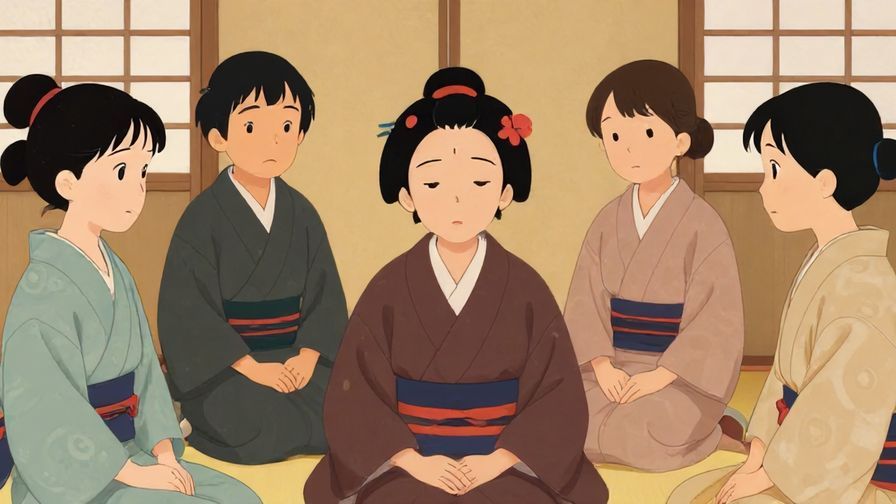
“和” (wa) means harmony, a key concept in Japanese culture.
Calling someone “和を乱す人” means they disturb the group harmony.
This is a formal and culturally sensitive way to describe a party pooper.
It’s best used in polite conversation or work environments.
It can imply someone who causes tension or awkwardness.
Try it to sound more nuanced and culturally aware.
15. 雰囲気を壊すタイプ (Fun’iki o kowasu taipu) – “Type who breaks the atmosphere”

Adding “タイプ” (type) makes this phrase a bit more casual but still polite.
It’s a flexible way to describe a party pooper without direct blame.
Good for semi-formal conversations or gentle teasing.
It softens the expression by implying a category rather than a direct attack.
Use it when you want to be honest but kind.
This is a handy phrase to have in your polite vocabulary.
16. 楽しみを奪う人 (Tanoshimi o ubau hito) – “Person who steals the fun”

This phrase means “person who steals the fun” — a clear but polite expression.
It works well in both formal and casual contexts.
You can use it to describe someone who dampens the mood through negative actions.
It conveys the impact without sounding too harsh.
It’s a strong phrase but maintains politeness.
Try it when you want to express frustration diplomatically.
Part 3: Very Casual / Native-like Expressions
17. ズルい奴 (Zurui yatsu) – “Lame guy” or “Unfair guy”

“ズルい” means “sneaky” or “unfair,” but in slang, it’s used to tease someone who’s lame or a party pooper.
“奴” (yatsu) is a casual, sometimes rough way to say “guy” or “person.”
It’s a playful insult often used among close friends.
You might say, “ズルい奴だな,” meaning “You’re such a lame guy.”
Use it with a smile and only with people who know you well.
It’s a popular phrase in casual Japanese.
18. おもしろくない奴 (Omoshiroku nai yatsu) – “Unfunny guy”

This phrase means “unfunny guy,” a straightforward way to call out a party pooper.
It’s casual and slightly teasing.
“おもしろい” means “funny” or “interesting,” so adding “くない” negates it.
“奴” again is a casual “guy” or “person.”
Good for joking around with friends who don’t get the jokes.
Just be sure your tone is playful!
19. つまんないやつ (Tsumannai yatsu) – “Boring guy”

“つまんない” is a casual contraction of “つまらない,” meaning “boring.”
Adding “やつ” (another reading of “奴”) gives a casual edge.
It’s an easy way to call someone a party pooper in a laid-back way.
Use it among friends for light teasing.
It’s super common in everyday conversations.
Perfect for blending in with native speakers.
20. ノリ悪いやつ (Nori warui yatsu) – “Person with bad vibe”

This is a casual, native-like way to say someone has a “bad vibe.”
“ノリ悪い” means “bad at joining in,” and “やつ” softens it to a casual “person.”
It’s perfect for chatting with friends about someone who’s a party pooper.
It’s easy to say and remember.
Just keep it friendly to avoid offending.
This phrase is a must-know for casual Japanese banter.
21. 冷めてるやつ (Sameteru yatsu) – “Cold guy”

A casual version of “冷めてる,” adding “やつ” to make it more playful.
It’s a common way to tease someone who’s not excited or into the party.
Used among friends for lighthearted jokes.
It’s a simple phrase you can use anytime.
Try it when someone’s being a buzzkill.
It’s familiar and friendly in tone.
22. つまらん奴 (Tsumaran yatsu) – “Boring dude”

“つまらん” is a very casual, shortened form of “つまらない.”
Paired with “奴,” it makes for a casual insult meaning “boring dude.”
It’s commonly used among young people.
Great for joking but don’t use it seriously!
It’s short, punchy, and easy to remember.
Perfect for sounding like a native when calling out a party pooper.
Concluding Thought
Exploring all these ways to say “party pooper” in Japanese shows just how rich and expressive the language is.
From playful nicknames to polite phrases, you have a whole toolkit to describe anyone who kills the fun.
So next time you spot a mood killer, you’ll have just the right phrase to describe them with warmth, humor, or tact depending on the moment. Happy learning and party on!