22 Japanese ways to say “I won’t give in”
Sometimes, life throws challenges our way, and it’s easy to feel like giving up.
But in Japanese, there are many heartfelt ways to say “I won’t give in” that can inspire your spirit and add depth to your expression.
Each phrase carries its own nuance, from casual determination to polite resolve.
Whether you’re learning the language or just love Japanese culture, these expressions can help you convey your strength beautifully.
By practicing these phrases, you can also boost your confidence in conversations and feel closer to the mindset of resilience.
Let’s dive into 22 Japanese ways to say “I won’t give in,” complete with pronunciation guides so you can say them like a pro!
Understanding the Spirit of “I Won’t Give In” in Japanese
Before jumping into the phrases, it’s good to know that Japanese expresses determination and persistence with a variety of words depending on the context.
There’s subtlety in tone, formality, and imagery behind each phrase, so you can pick the one that fits your mood or situation perfectly.
Whether it’s a personal goal or standing your ground in a conversation, these phrases help you communicate your resolve.

Sometimes, using a great beginner phrasebook can give you a perfect starting point for a cohesive understanding.
It’s all about starting small and building your confidence step by step.
With these phrases in your toolkit, you’ll be ready to face challenges head-on!
Part 1: Casual Suggestions
1. 諦めない (Akiramenai) – “I won’t give up.”

“Akiramenai” is the most straightforward way to say “I won’t give up.”
It’s the negative form of 諦める (akirameru), meaning “to give up,” so by saying “akiramenai,” you’re firmly stating you won’t quit. It’s casual but powerful.
Use it when you want to show inner strength in everyday conversations.
This word is easy to remember because it starts with “aki,” which you can link to “act” in English — act to keep going!
You might hear it in motivational speeches or friendly encouragements.
Keep “Akiramenai” handy for those moments when you want to express your unshakable spirit simply and clearly.
2. 負けない (Makenai) – “I won’t lose.”

“Makenai” literally means “I won’t lose.”
It’s from 負ける (makeru), which means “to lose,” so the negative form strengthens your resolve not to be defeated.
This phrase is great for sports, competitions, or situations where you want to assert your unwillingness to back down.
Think of it as your personal battle cry when facing challenges.
It’s casual and energetic, often used among friends or in informal settings.
Try saying “Makenai!” when you want to pump yourself up and keep your fighting spirit alive.
3. やり抜く (Yarinuku) – “I’ll see it through.”

“Yarinuku” means “to carry out something to the end” or “to see something through.”
It combines やる (yaru, “to do”) + 抜く (nuku, “to pull out/complete”), so it expresses a strong commitment to finishing what you start.
Use this phrase when you want to emphasize persistence and follow-through.
It’s a bit more descriptive and action-oriented than just “not giving up.”
This is perfect for projects, goals, or any long-term commitment.
Remember “Yarinuku” when you want to highlight your dedication through to the finish line.
4. 負けずに頑張る (Makezu ni ganbaru) – “I’ll do my best without losing.”

“Makezu ni ganbaru” combines 負けずに (makezu ni, “without losing”) and 頑張る (ganbaru, “to do one’s best”).
This phrase expresses a determined effort to keep going without being defeated.
It’s a little longer but very expressive and common in everyday conversation.
People use it to encourage themselves or others to persevere.
It’s casual but shows strong will and positivity.
Use it to remind yourself to keep trying no matter what!
5. 踏ん張る (Funbaru) – “I’ll hold my ground.”

“Funbaru” means to “brace oneself” or “hold one’s ground.”
It’s often used when you’re resisting pressure or enduring tough times.
The word paints a strong image of standing firm, which makes it perfect for saying “I won’t give in.”
It’s casual and frequently heard in conversation.
Try associating “Funbaru” with “fun” to remember that holding on can be a positive, uplifting challenge.
This phrase is your go-to when you want to express holding steady no matter what.
6. 負けないぞ! (Makenai zo!) – “I won’t lose!” (with emphasis)

“Makenai zo!” adds the particle ぞ (zo) for a strong, masculine emphasis.
This phrase is casual, bold, and full of energy.
It’s great for moments when you want to make a confident declaration.
The “zo” adds a punch that’s common in energetic speech among close friends or sports teams.
Use it to hype yourself up or show strong determination.
“Makenai zo!” is perfect when you want to sound fired up and ready to face anything.
7. 負けてたまるか (Makete tamaruka) – “No way I’ll lose!”
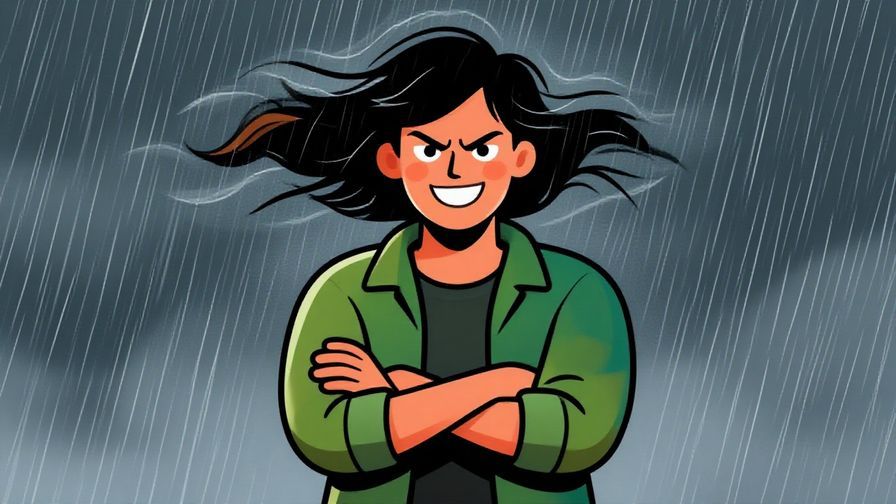
“Makete tamaruka” is a very natural, informal phrase meaning “there’s no way I’ll lose.”
It carries a sense of stubborn refusal and spirited defiance.
“Tamaruka” is a colloquial ending that expresses “I won’t allow it.”
This phrase is full of personality and great for casual conversations.
It’s often heard in anime or dramas when characters show fiery determination.
Use “Makete tamaruka” to bring some passionate flair into your expressions.
8. やめない (Yamenai) – “I won’t stop.”

“Yamenai” is the negative form of やめる (yameru), meaning “to stop.”
It’s a simple way to say “I won’t stop” or “I won’t quit.”
This phrase can be used in many contexts, from habits to efforts.
It’s casual and straightforward, making it easy to use every day.
Think of it as your verbal promise to keep going.
“Yamenai” is perfect when you want to express steady persistence without fuss.
Part 2: Polite & Formal Suggestions
9. 諦めません (Akirame masen) – “I won’t give up.” (polite)

“Akirame masen” is the polite negative form of 諦める (akirameru), meaning “I won’t give up.”
Use this form in formal or respectful conversations, such as at work or with elders.
It’s polite but still conveys strong determination.
Adding ません (masen) makes the phrase respectful and appropriate in many situations.
It’s a great phrase to use when discussing goals seriously.
“Akirame masen” balances politeness with conviction beautifully.
10. 負けません (Makemasen) – “I won’t lose.” (polite)

“Makemasen” is the polite negative form of 負ける (makeru), meaning “I won’t lose.”
Use it in formal or respectful contexts to politely express your resolve.
It’s a professional way to assert your determination.
The polite form is often necessary in business or more formal settings.
It shows you respect the listener while still staying firm.
“Makemasen” is perfect for polite, confident conversations.
11. 諦めるわけにはいきません (Akirameru wake ni wa ikimasen) – “I can’t afford to give up.”

This phrase means literally “There’s no way I can give up.”
It’s polite and expresses a strong sense of obligation or necessity not to quit.
Use it in formal speeches or serious conversations.
The phrase highlights that giving up is not an option.
It’s a great way to express responsibility and determination politely.
Perfect for respectful yet firm declarations.
12. 諦めることはできません (Akirameru koto wa dekimasen) – “I cannot give up.”

“Akirameru koto wa dekimasen” literally means “I cannot give up.”
This polite phrase emphasizes inability or impossibility of giving up.
It’s a gentle but strong way to express determination.
Perfect for formal writing or speeches.
It adds nuance by focusing on the impossibility rather than just refusal.
Use it to sound thoughtful and resolute.
13. 諦めるつもりはありません (Akirameru tsumori wa arimasen) – “I have no intention of giving up.”

This phrase means “I have no intention of giving up.”
It’s polite and expresses your firm intention clearly.
The word つもり (tsumori) means “intention,” so you’re stating your mindset strongly.
It’s useful in formal discussions or when explaining your stance.
This phrase comes off thoughtful and confident.
Keep it in mind when you want to sound respectful but determined.
14. 諦めない覚悟です (Akiramenai kakugo desu) – “I am determined not to give up.”

“Akiramenai kakugo desu” means “I am determined not to give up.”
覚悟 (kakugo) means “determination” or “resolve.”
This phrase is polite and expresses a strong mental readiness.
Use it to show you’ve mentally prepared yourself to keep going no matter what.
It’s formal but emotionally powerful.
Great for speeches or important conversations.
15. 最後まで頑張ります (Saigo made ganbarimasu) – “I’ll do my best until the end.”

“Saigo made ganbarimasu” means “I’ll do my best until the end.”
It’s polite and expresses persistence through to the finish.
Use it in formal or casual contexts to express ongoing effort.
It’s encouraging and positive.
“Ganbaru” is a key verb for effort and perseverance.
Perfect for showing your commitment politely and warmly.
16. 立ち向かいます (Tachimukaimasu) – “I will stand up to (the challenge).”

“Tachimukaimasu” means “I will stand up to” or “face” challenges.
It’s polite and conveys active resistance or confrontation.
Perfect for formal or serious discussions about adversity.
The phrase emphasizes courage and directness.
Use it to express your willingness to face difficulties bravely.
It adds a dynamic feel to your resolve.
Part 3: Very Casual / Native-like Expressions
17. めげない (Megenai) – “I won’t be discouraged.”

“Megenai” means “I won’t be discouraged” or “I won’t lose heart.”
This very casual and native-like expression is common among friends.
It’s perfect when you want to sound lighthearted but strong.
The word connects well with feelings of emotional resilience.
Use it to show you’re keeping your spirits up, no matter what.
“Megenai” is a warm, friendly way to say “I won’t give in.”
18. 粘る (Nebaru) – “I’ll stick with it.”

“Nebaru” means “to persist” or “to stick with something stubbornly.”
It’s casual but carries a strong image of tenacity.
Native speakers use it to describe someone who won’t let go or give up easily.
It’s a great word to sound natural and determined.
Think of it as “sticking” to your goal no matter what.
Use “Nebaru” when you want to express gritty perseverance.
19. 諦めるもんか (Akirameru mon ka) – “No way I’ll give up!”

“Akirameru mon ka” is a very casual, almost defiant phrase meaning “No way I’ll give up!”
“Mon ka” adds a strong denial and emotional punch.
It’s often used among close friends or in informal speech.
Great for showing stubbornness with attitude.
Use it to sound confident and a little cheeky.
This phrase is perfect for casual, passionate moments.
20. 負けてらんない (Maketerannai) – “I can’t afford to lose.”

“Maketerannai” is a very casual contraction of 負けてはいられない, meaning “I can’t afford to lose.”
It’s commonly used in everyday conversation to express urgency and resolve.
This phrase is great for sounding natural and spontaneous.
Use it when you want to stress you’re in it to win it.
It’s informal, so best with friends or peers.
Try “Maketerannai” for a lively way to say you won’t give in.
21. やるしかない (Yaru shika nai) – “I have no choice but to do it.”

“Yaru shika nai” literally means “There is no choice but to do it.”
It’s a very casual but powerful expression of resolve.
You’re basically saying, “I won’t back down because I have to see this through.”
Commonly used when motivation is mixed with necessity.
It sounds natural and relatable.
Use it to express your commitment in a down-to-earth way.
22. くじけない (Kujikenai) – “I won’t be broken (by adversity).”

“Kujikenai” means “I won’t be broken” or “I won’t be discouraged.”
It’s a warm, encouraging phrase that expresses emotional resilience.
Great for casual or heartfelt conversations.
It carries a soft but firm tone of strength.
Use it when you want to sound hopeful and steady.
“Kujikenai” is perfect for expressing gentle, unyielding spirit.
Concluding Thought
Learning different ways to say “I won’t give in” in Japanese opens a window into the culture’s rich expressions of strength and perseverance.
From casual phrases to polite declarations, each one offers a unique way to share your determination and boost your confidence.
So next time you face a challenge, remember these phrases and say them with heart — you’ve got this!